In the intricate world of biopharmaceutical manufacturing, the journey of a new drug begins long before it is filled into a vial. The lifecycle of a biologic is traditionally divided into two major phases: upstream and downstream. If we think of a drug as a biological masterpiece, upstream process development is the stage where the “creation” happens. It is the phase where living cells are engineered, nurtured, and scaled up to produce the desired therapeutic molecule.
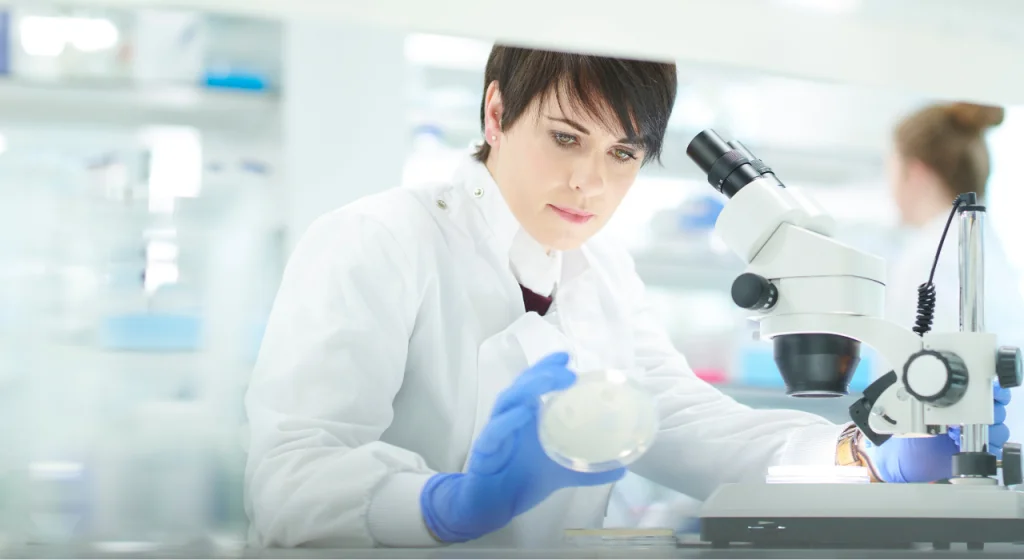
For companies navigating CMC development (Chemistry, Manufacturing, and Controls), the upstream stage is critical. A robust upstream process ensures that the biological “factory”—be it bacteria, yeast, or mammalian cells—is efficient, stable, and capable of producing high yields of the target protein or nucleic acid.
The Core Components of Upstream Development
Upstream development encompasses everything related to the initial growth and cultivation of the production organism. It is a multi-step process that requires a deep understanding of microbiology, genetic engineering, and biochemical engineering.
- Cell Line or Strain Engineering: The process starts with selecting the right host. In microbial manufacturing, this often involves engineering E. coli or yeast to carry the genetic instructions (the “expression vector”) for the drug. The goal is to create a “Master Cell Bank” (MCB) that is genetically stable and highly productive.
- Media Optimization: Just as a gardener chooses the best soil, scientists must develop a “recipe” for the culture media. This liquid broth contains the sugars, salts, vitamins, and amino acids the cells need to thrive. Optimizing these components can significantly increase the final concentration of the drug (the “titer”).
- Cultivation and Fermentation: Once the cells are ready, they are grown in bioreactors or fermenters. This stage involves moving from small-scale shake flasks to increasingly larger vessels. During this scale-up, scientists must meticulously control environmental factors such as temperature, pH, dissolved oxygen, and agitation speeds.
Why Upstream Process Development is Vital for CMC
In the context of CMC development, the upstream phase is where “Quality by Design” (QbD) begins. Regulatory agencies require proof that the manufacturing process is consistent and controllable.
If the upstream process is poorly defined, the “Controls” part of CMC becomes impossible to manage. For instance, if the temperature in a fermenter fluctuates too much, the bacteria might produce the target protein incorrectly, leading to misfolding or the creation of unwanted byproducts. These impurities then place an overwhelming burden on the downstream (purification) team.
Furthermore, the upstream stage dictates the economic viability of the project. A high-titer upstream process means more drug can be produced in a single batch, reducing the overall cost per dose. For B2B partners, an optimized upstream strategy is the difference between a successful clinical trial and a project that is too expensive to commercialize.
Challenges in Microbial Upstream Processing
While microbial systems like E. coli are known for their rapid growth and high yields, they present specific challenges during upstream process development.
- Metabolic Burden: When a cell is forced to produce massive amounts of a foreign protein, its normal growth can be stunted. Balancing cell health with product yield requires precise feeding strategies (Fed-batch processing).
- Inclusion Bodies: Sometimes, bacteria produce proteins so quickly that they clump together into “inclusion bodies.” Upstream scientists must decide whether to slow down production to keep the protein soluble or to develop specialized ways to “refold” these clumps later.
- Genetic Stability: As cells divide billions of times in a large fermenter, there is a risk that they might lose the genetic instructions for the drug. Ensuring “plasmid stability” through the entire duration of the fermentation is a hallmark of a high-quality process.
Advancing Upstream Excellence with Yaohai Bio-Pharma
At Yaohai Bio-Pharma, we recognize that the upstream process is the heart of biomanufacturing. As a leading microbial CDMO, our CMC development platform is built on a foundation of world-class upstream expertise. We specialize in transforming a laboratory-scale sequence into a high-yielding, industrial-grade process.
We provide a comprehensive suite of upstream services tailored to recombinant proteins, DNA vaccines, and plasmid DNA. Our capabilities include:
- Strain Construction and Optimization: We leverage a library of proprietary expression systems and microbial hosts to ensure your molecule gets the best possible start.
- High-Throughput Process Screening: Using advanced mini-bioreactor systems, we can test hundreds of different media and growth conditions simultaneously, dramatically shortening the time required for optimization.
- Scalable Fermentation Platforms: Our facility features a range of cGMP-compliant fermenters, from 7L and 50L for pilot studies to 200L, 500L, and 2,000L for large-scale production. This allows for a seamless “scale-up” transition without the need to reinvent the process at each stage.
Operating from our 20,000 m² state-of-the-art production base, we ensure that every upstream parameter is digitally monitored and strictly controlled. Our history of successful audits by the FDA, NMPA, and other global authorities is a testament to the rigor we apply to our upstream operations.
At Yaohai Bio-Pharma, we don’t just grow cells; we engineer the future of medicine. By partnering with us, you gain access to an integrated platform that prioritizes yield, quality, and regulatory compliance from the very first cell. We are committed to helping our partners reach their clinical and commercial milestones by mastering the complex science of upstream process development.