In the competitive landscape of biopharmaceutical innovation, the quality of your final drug product is inextricably linked to the genetic and physiological vigor of the cells that produce it. Cell line development (CLD) is the foundational process of creating a stable, high-yielding population of cells—the “biological factories”—that can reliably synthesize your therapeutic molecule across thousands of generations.

As a critical component of CMC development, selecting the right cell line or microbial strain is not just a scientific task; it is a major business decision. A suboptimal cell line can lead to “expression drift,” low titers, or unfavorable post-translational modifications that can haunt a project through clinical trials and even lead to market rejection.
The Criteria for a High-Performance Cell Line
Choosing a cell line development service provider requires an evaluation that goes beyond mere yield. While high titers (the concentration of the drug in the fermentation broth) are essential for commercial viability, several other factors determine the long-term success of the therapeutic program.
- Genetic and Phenotypic Stability: The selected clone must maintain consistent protein expression levels over the duration of the manufacturing process. In a large-scale 2,000L bioreactor, cells may divide 60 times or more. If the production “engine” loses its genetic blueprint during this period, the entire batch could be lost.
- Scalability: A cell line that thrives in a 250mL shake flask might struggle in a high-pressure industrial fermenter. Quality services prioritize “future-proofing” by selecting clones that are robust enough to withstand the mechanical and chemical stresses of large-scale manufacturing.
- Critical Quality Attributes (CQAs): For recombinant proteins, factors like glycosylation patterns, folding accuracy, and charge variants are vital. The right partner will screen for these attributes early in the development cycle to ensure the biologic remains comparable to its original design.
Navigating the B2B Selection Process
For biotechnology firms, the selection of a CDMO partner for CLD often focuses on balancing speed with risk mitigation. B2B decision-makers should look for “Integrated Platforms” rather than fragmented services. When cell line development is performed in isolation from the downstream (purification) and CMC teams, critical information can be lost.
An ideal cell line development service should provide:
- Traceability and Documentation: Full documentation of the cell line’s history is a non-negotiable requirement for IND (Investigational New Drug) and BLA (Biologics License Application) filings. This includes the source of the host cell, the vector construction, and the cloning methodology.
- High-Throughput Screening: Modern development relies on automated systems to screen thousands of individual clones simultaneously. This “needle in a haystack” search is the only way to find the rare, ultra-high-producing clone that will define the drug’s success.
- Animal-Free and Royalty-Free Options: To simplify the supply chain and reduce long-term licensing costs, many developers prefer platforms that use chemically defined, animal-component-free (CDACF) media and host systems with clear intellectual property pathways.
The Role of Microbial Expression Specialization
While mammalian cells (like CHO) are common for complex antibodies, microbial expression systems—such as E. coli and yeast—are the gold standard for many recombinant proteins, peptides, and DNA vaccines. Microbial CLD requires a different set of specialized skills, focused on codon optimization, metabolic burden management, and plasmid stability.
A partner with deep microbial expertise can engineer strains that produce proteins in a soluble form rather than as “inclusion bodies,” significantly simplifying the downstream purification process and improving the overall CMC profile.
Advancing Biologics with Yaohai Bio-Pharma
At Yaohai Bio-Pharma, we believe that the journey to a successful drug begins with a single, perfect cell. As a premier microbial CDMO, our cell line development service is designed to provide our partners with a seamless transition from genetic sequence to a cGMP-compliant Master Cell Bank (MCB).
We have built an integrated CMC development platform that specializes in the high-efficiency expression of recombinant proteins, plasmid DNA, and antibody fragments using E. coli and various yeast systems. Our approach is rooted in technical precision and regulatory foresight:
- Customized Strain Engineering: We provide professional codon optimization and recombinant plasmid construction tailored to the specific amino acid sequence of your molecule. Our goal is to maximize product yield while ensuring the structural integrity of the target biologic.
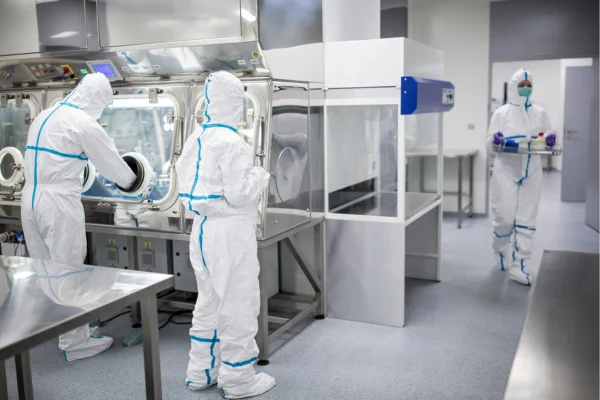
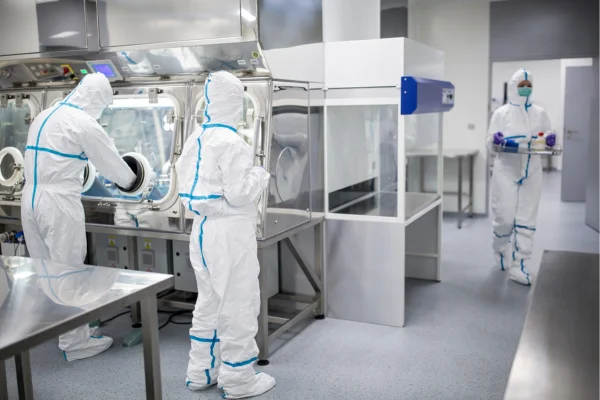
- Robust Banking and Storage: Within our 20,000 m² state-of-the-art production base, we operate independent workshops for strain bank establishment. We offer comprehensive PCB, MCB, and WCB (Working Cell Bank) services, all conducted under strict cGMP guidelines to prevent contamination and ensure long-term stability.
- Global Regulatory Compliance: Our cell lines and the documentation we provide are designed to meet the stringent requirements of the FDA, NMPA, and EMA. We use traceable host strains from world-renowned sources (ATCC, ThermoFisher) and ensure that all patent restrictions are cleared, effectively de-risking your global market entry.
At Yaohai Bio-Pharma, we don’t just deliver a cell line; we deliver the foundation of your commercial future. By combining our deep institutional knowledge of microbial physiology with high-throughput screening and rigorous quality control, we empower our partners to bring life-saving therapies to market faster and more reliably.