In the high-stakes world of pharmaceutical manufacturing, the Quality Management System (QMS) is often described as the “invisible infrastructure.” While it doesn’t produce the drug itself, it is the framework that ensures every vial leaving the facility is safe, potent, and compliant. For biopharmaceutical developers, understanding the financial architecture of a quality management system in pharma is essential for balancing the need for rigorous standards with the realities of project budgets.

Investing in quality is not merely a regulatory burden; it is a strategic maneuver to avoid the catastrophic “Cost of Poor Quality” (CoPQ). In this industry, the cost of a mistake grows exponentially the further it travels down the supply chain.
The Four Pillars of Quality Costs
To break down the expenditure of a robust QMS, industry experts typically categorize costs into four distinct quadrants. This framework helps organizations move from a reactive “firefighting” mode to a proactive, value-driven quality culture.
- Prevention Costs: These are the proactive investments made to ensure that defects do not occur in the first place. This includes the development of Standard Operating Procedures (SOPs), employee training programs on Good Manufacturing Practices (GMP), and the initial design of the manufacturing facility itself. In a modern GMP quality assurance program, prevention often accounts for a significant portion of the upfront budget but yields the highest return on investment.
- Appraisal Costs: Also known as “detection costs,” these involve the ongoing activities to verify that the product meets its quality standards. This includes laboratory testing of raw materials, in-process monitoring of fermentation batches, and final drug product release testing. The cost here is driven by specialized labor and high-end analytical instrumentation.
- Internal Failure Costs: These costs arise when a quality issue is detected before the product leaves the facility. Examples include the cost of scrapping a contaminated batch, the labor required for a complex Root Cause Analysis (RCA), and the time spent on Corrective and Preventive Actions (CAPA).
- External Failure Costs: This is the most expensive quadrant and the one every QMS is designed to eliminate. It includes product recalls, regulatory fines (such as those resulting from FDA Warning Letters), legal liabilities, and the long-term loss of brand reputation.
Quantitative Cost Distribution in Biomanufacturing
In a typical large-scale pharmaceutical facility, quality-related activities can consume up to 25% of the total site operating budget (excluding raw materials). When we look at the specific distribution of these costs, a clear pattern emerges:
| Cost Category | Estimated % of Total Quality Spend | Key Drivers |
| Appraisal & Detection | 40% – 50% | Analytical testing, QC lab staffing, raw material inspection. |
| Prevention & Compliance | 20% – 30% | QMS software, training, validation/qualification, auditing. |
| Internal Failure | 15% – 25% | Batch rework, OOS investigations, discarded materials. |
| External Failure | Variable (Goal: 0%) | Recalls, legal fees, regulatory penalties. |
As we navigate 2026, the industry is increasingly adopting “Compliance by Design.” Research shows that companies that integrate GMP quality assurance into their initial development phase can reduce their overall compliance spend by 30% to 40% compared to those who attempt to “retrofit” quality into an existing process.
Strategic Drivers: Labor, Software, and Facilities
Beyond the theoretical categories, the day-to-day cost of a quality management system in pharma is driven by three tangible factors:
- Expert Human Capital: Biologics require a high ratio of QA/QC personnel to production staff. In some high-potency suites, the quality team may represent nearly half of the total headcount.
- Digital Transformation: The shift from paper-based records to Electronic Quality Management Systems (eQMS) involves significant licensing and validation costs. However, these systems are essential for maintaining “Data Integrity” (ALCOA+) and reducing the labor-intensive nature of manual audits.
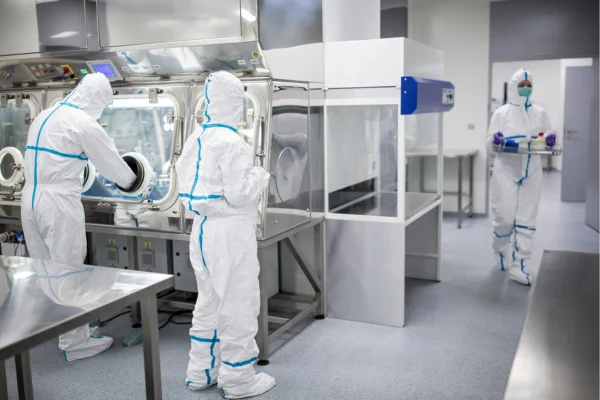
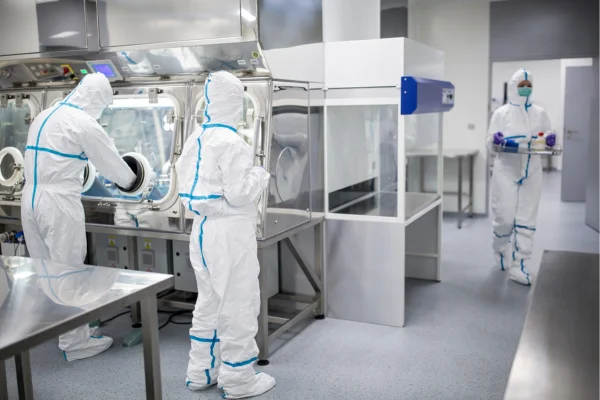
- Facility Maintenance: Maintaining a GMP-certified cleanroom requires constant environmental monitoring, HEPA filter certifications, and rigorous cleaning protocols, all of which fall under the umbrella of quality assurance expenditure.
Efficiency and Compliance with Yaohai Bio-Pharma
At Yaohai Bio-Pharma, we recognize that for our B2B partners, quality is the ultimate “life insurance” for their therapeutic assets. We have designed our quality assurance service platform to offer a high-efficiency, integrated approach that minimizes the “Cost of Quality” while maximizing regulatory certainty.
As a leading microbial CDMO, we operate from a 20,000 m² state-of-the-art production base that was built from the ground up on the principle of “Quality by Design” (QbD). Our GMP quality assurance program is built to meet the most stringent requirements of the FDA, EMA, and NMPA, ensuring that our clients’ molecules are ready for global registration.
Our value proposition lies in our integrated “One-Stop” service model. By managing the full lifecycle—from strain construction to commercial production—we eliminate the “hidden costs” of technology transfers and fragmented documentation. Our platform features:
- A Mature Document System: Covering ten critical systems, from materials management to qualification and validation, providing “submission-ready” data for your IND and BLA filings.
- Advanced Analytical Support: Our Modern Quality Research Service Center is equipped with high-end instrumentation (HPLC, UHPLC, CE, Q-PCR) to provide rapid, precise appraisal testing.
- Global Audit Excellence: With a track record of over 100 successful audits from major international authorities, we provide the regulatory confidence that only comes with proven experience.
At Yaohai Bio-Pharma, our mission is to “Establish Global Benchmarks” and empower the development of life-saving medicines. We believe that by investing in the highest standards of GMP quality assurance, we aren’t just managing costs—we are building the future of healthy living.