In the traditional pharmaceutical paradigm, the “finish line” of manufacturing is often followed by a weeks-long waiting period. This is the era of end-product testing, where samples are sent to a laboratory to undergo a battery of checks before they can be released to patients. However, as we move into 2026, the industry is witnessing a seismic shift. The future of drug product release testing is being defined by a move away from “testing for quality” at the end of the line toward “building in quality” through real-time, data-driven technologies.

This evolution is particularly vital for the next generation of therapeutics—such as personalized mRNA vaccines and complex recombinant proteins—where speed, precision, and stability are paramount.
The Rise of Real-Time Release Testing (RTRT)
The most significant trend in modern quality control is the implementation of Real-Time Release Testing (RTRT). Rather than relying on a final retrospective analysis, RTRT uses a combination of in-process monitoring and characterization to evaluate the quality of a batch while it is still being manufactured.
The benefits of this approach are transformative:
- Drastic Lead-Time Reduction: By validating quality at each intermediate step, the time from the end of production to the “release” of the drug can be reduced from weeks to mere hours.
- Reduction in Batch Waste: Traditional testing only identifies a failure after the entire batch is complete. RTRT identifies deviations in real time, allowing for immediate corrective actions or the early diversion of sub-standard materials, saving millions in lost production costs.
- Higher Statistical Confidence: Instead of testing a small subset of samples from a batch of thousands, RTRT utilizes continuous sensors that monitor the entire production run, providing a much higher level of assurance regarding product consistency.
Next-Generation Analytical Technologies
To achieve RTRT, the industry is adopting “Advanced Analytical Techniques” that function inside the production line (in-line) or directly adjacent to it (at-line).
- Process Analytical Technology (PAT): This includes tools like Near-Infrared (NIR) and Raman spectroscopy. These sensors can “see” through containers or directly into bioreactors to measure chemical composition, moisture levels, or protein folding without ever touching the product.
- High-Resolution Mass Spectrometry (HRMS): Once confined to specialized R&D labs, HRMS is moving into the QC environment. It allows for the precise quantification of complex molecules and the detection of even the most minute impurities, such as single-base modifications in DNA vaccines or glycan variants in proteins.
- Automated Endotoxin and Sterility Testing: Traditionally, sterility testing required a 14-day incubation period. New “Rapid Microbial Methods” (RMM) use bioluminescence or flow cytometry to detect microbial contamination in a fraction of that time, removing one of the biggest bottlenecks in drug product release testing.
AI and the “Digital Twin” in Quality Control
As we navigate 2026, Artificial Intelligence (AI) has moved from a buzzword to a core component of the quality lab. AI-driven predictive models are now used to simulate how a drug will perform based on its manufacturing data—a concept known as the Digital Twin. By comparing the real-time data from a production run against a digital model of a “perfect” batch, manufacturers can predict the final quality with near-certainty before the product even leaves the line.
Furthermore, the FDA and other global regulators are increasingly embracing AI-centric frameworks. These new guidelines emphasize a “risk-based approach,” where high-confidence AI models can support regulatory readiness and decrease the reliance on traditional, labor-intensive manual testing.
Redefining Excellence with Yaohai Bio-Pharma
At Yaohai Bio-Pharma, we recognize that a rapid path to market is essential for our partners, but it must never come at the expense of safety. Our quality control platform is designed to bridge the gap between cutting-edge technology and rigorous global compliance. As a specialized microbial CDMO, we have integrated the future of release testing into our core operations.
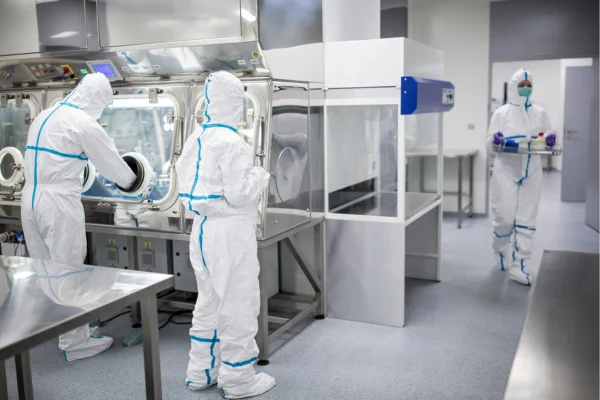
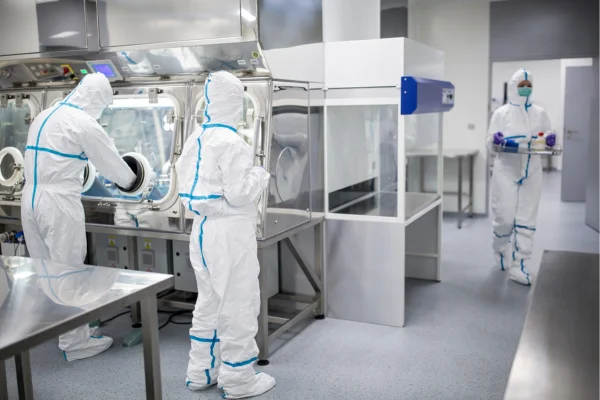
We understand that for complex biologics, the “Controls” are as important as the “Chemistry.” Our 20,000 m² state-of-the-art production base is equipped with an advanced analytical suite that reflects the latest industry innovations. Our commitment to quality is demonstrated by:
- Integrated PAT Capabilities: We employ advanced sensors and automated monitoring systems to maintain real-time oversight of critical process parameters (CPPs), ensuring that every batch of recombinant protein or plasmid DNA meets our “Quality by Design” (QbD) benchmarks.
- Global Regulatory Readiness: We have a proven track record of over 100 successful audits from the FDA, NMPA, TGA, and MFDS. This global experience ensures that the drug product release testing data we generate is robust, transparent, and fully compliant with international standards like ALCOA+.
- Rapid Method Development: Members of the quality control team have undergone rigorous GMP training and have a thorough understanding of the latest GMP requirements.
At Yaohai Bio-Pharma, we are dedicated to “Establishing Global Standards” in every dose we produce. By leveraging the power of modern QC technologies, we provide our partners with a faster, safer, and more reliable path to commercial success. We believe that by mastering the future of release testing, we empower the delivery of life-saving innovations to the patients who need them most.