In the competitive sphere of biopharmaceutical production, the transition from a laboratory-scale breakthrough to a commercial-grade therapeutic is governed by a fundamental requirement: the ability to measure what we manufacture. Analytical method development is the scientific discipline of creating, optimizing, and validating the experimental procedures used to assess a drug’s identity, purity, potency, and safety.
Without high-quality analytical methods, the entire CMC development process—the Chemistry, Manufacturing, and Controls that regulatory bodies scrutinize—lacks its primary source of truth. Managing the quality of these methods is not merely a technical task; it is a strategic necessity that ensures patient safety and prevents costly regulatory delays.
The Lifecycle Approach to Analytical Quality
Modern pharmaceutical quality management has shifted from a “fixed-testing” mindset to a lifecycle-based approach. This ensures that analytical methods remain robust and reliable as a drug moves through different clinical phases. Quality management in this context is built upon three core stages:
- Method Design and Development: This is the “science” phase where researchers select the most appropriate techniques—such as High-Performance Liquid Chromatography (HPLC) or Capillary Electrophoresis (CE)—based on the molecule’s physical and chemical properties. Quality is managed here by defining the Analytical Target Profile (ATP), which outlines exactly what the method needs to achieve (e.g., a specific limit of detection for a known impurity).
- Method Qualification and Validation: Before a method can be used for official GMP release testing, it must be validated. This involves rigorous testing for accuracy, precision, specificity, linearity, and robustness. For early-stage clinical trials, “qualification” provides sufficient evidence of safety, while late-stage and commercial products require full “validation” in accordance with ICH Q2(R1) guidelines.
- Ongoing Performance Verification: Even after a method is validated, its quality must be monitored. System Suitability Tests (SSTs) are performed during every run to ensure the equipment and reagents are performing within predefined limits.
Strategic Quality Management: AQbD
A key trend in CMC development is the adoption of Analytical Quality by Design (AQbD). Similar to its manufacturing counterpart, AQbD emphasizes understanding the variables that affect method performance. Instead of testing for quality at the end, scientists use risk assessments to identify which parameters (like pH of a mobile phase or column temperature) are most likely to impact the results. By defining a “design space” for the analytical method, we can ensure that it remains accurate even when minor, inevitable variations occur in the lab environment.
Managing Quality in Microbial and Biologic Assays
Biologics—including recombinant proteins and DNA vaccines—introduce unique challenges to analytical quality. Because these products are derived from living systems, they are inherently complex and heterogeneous. Managing analytical quality for these drugs requires:
- Purity Assessment: Differentiating the product from host cell proteins (HCPs), residual DNA, and endotoxins.
- Stability-Indicating Methods: Ensuring that the methods are sensitive enough to detect subtle degradation products, such as deamidation or aggregation, which could affect the vaccine’s efficacy.
- Potency Testing: Developing cell-based or biochemical assays that reflect the drug’s biological mechanism of action (MoA).
For a B2B partner, the quality of these methods is the “insurance policy” for their molecule. If a method is poorly developed, it can lead to “Out of Specification” (OOS) results that trigger lengthy investigations and halt production batches.
Excellence in Analytical Services at Yaohai Bio-Pharma
At Yaohai Bio-Pharma, we believe that the strength of a drug’s CMC filing is only as robust as the data supporting it. As a specialized microbial CDMO, we have developed an integrated CMC development platform where analytical research is not a secondary service, but a core pillar of our process.
We manage the quality of analytical method development through a combination of expert human capital and cutting-edge technology. Our quality research team is deeply experienced in the nuances of analyzing recombinant proteins, plasmids, and novel vaccines. We don’t just follow a standard protocol; we tailor our analytical strategies to the specific needs of your molecule and its intended clinical stage.
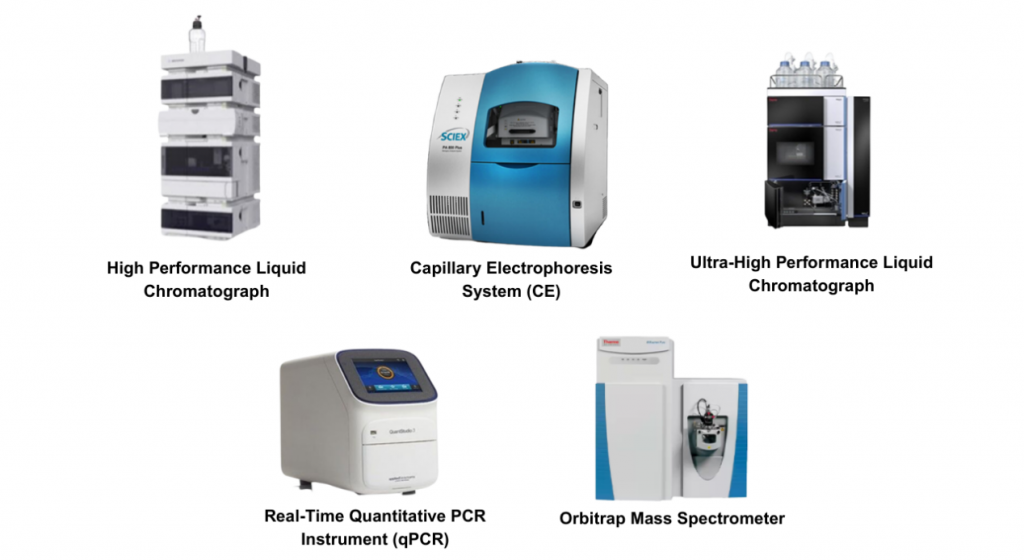
Our 20,000 m² state-of-the-art production base is equipped with a comprehensive suite of advanced instrumentation, including:
- High-Resolution Chromatography: Agilent and Thermo Fisher (U3000 Vanquish) HPLC/UHPLC systems for precise purity and assay testing.
- Molecular Characterization: Capillary Electrophoresis (CE) and Q-PCR for structural integrity and residual DNA quantification.
- Biophysical Analysis: Nanometer particle size analyzers and UV spectrophotometers to monitor physical stability.
By choosing Yaohai Bio-Pharma, you are partnering with a team that has successfully passed over 100 audits from global regulatory bodies, including the FDA, NMPA, TGA, and MFDS. This global track record is a testament to the rigor of our analytical management. We provide full-lifecycle support, from the initial method scouting and qualification for IND applications to the complex validation and method transfer required for commercial BLA filings.
At Yaohai Bio-Pharma, our mission is to establish global standards and boost the new drug development process. We ensure that your analytical methods are not just a regulatory requirement, but a high-performance tool that guarantees the consistent quality of your life-saving innovations.