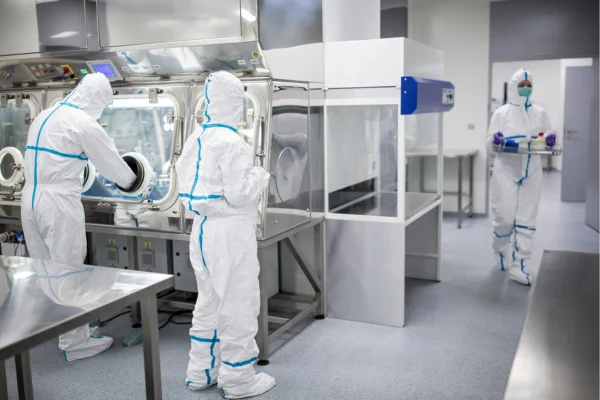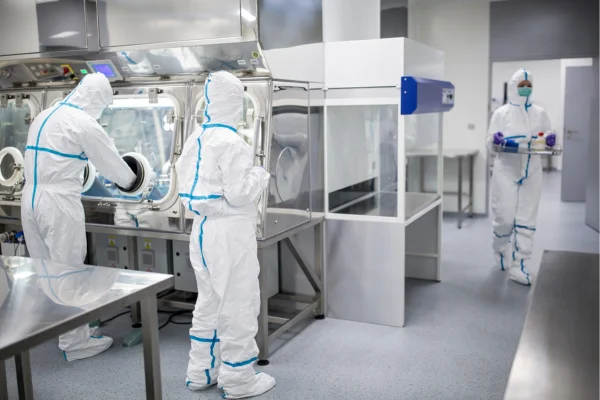
The emergence of mRNA technology has redefined the speed and flexibility of global vaccine manufacturing. Unlike traditional vaccines that require months to grow weakened viruses in chicken eggs or massive bioreactors, mRNA vaccines function as a biological “software” that instructs the body to produce its own protective antigens. However, the elegance of this mechanism belies a sophisticated, multi-stage production process that requires absolute precision in chemical synthesis and lipid engineering.
Stage 1: The Blueprint—Plasmid DNA Production
The journey of an mRNA vaccine begins with DNA. Although the final product is RNA, the template for that RNA is a circular piece of DNA called a plasmid. In this initial stage of vaccine manufacturing, the target genetic sequence (such as the code for a viral spike protein) is inserted into these plasmids.
These plasmids are then amplified by “planting” them into Escherichia coli bacteria, which act as biological photocopiers. Once the bacteria have multiplied in large fermenters, they are harvested and lysed (broken open) to release the DNA. This DNA must then be purified to remove all traces of the host bacteria and linearized—cut into a straight strand—to serve as a readable template for the next step.
Stage 2: The Forge—In Vitro Transcription (IVT)
The heart of mRNA vaccine manufacturing is the transition from DNA to RNA, a process known as In Vitro Transcription (IVT). This takes place in a controlled biochemical reactor rather than inside a living cell.
Linearized DNA templates are mixed with a “cocktail” of enzymes (like T7 RNA polymerase) and building blocks called nucleotides. Under precise conditions, the polymerase reads the DNA template and assembles a corresponding mRNA strand. During this stage, two critical modifications occur to ensure the vaccine works in the human body:
- Capping: A specialized “cap” is added to the 5′ end of the mRNA. Without this, the body’s immune system would instantly recognize the RNA as foreign and destroy it before it could enter a cell.
- Poly-A Tail: A long tail of adenine nucleotides is added to the 3′ end to enhance the stability and “shelf-life” of the molecule inside the cell.
Stage 3: The Shield—Lipid Nanoparticle (LNP) Encapsulation
Raw mRNA is incredibly fragile; it would degrade in seconds if injected directly into the bloodstream. To solve this, the industry utilizes nanotechnology. The purified mRNA is encapsulated in Lipid Nanoparticles (LNPs).
Using microfluidic mixing technology, the mRNA is combined with a precise mixture of lipids (fats). These lipids form a protective oily bubble around the mRNA, allowing it to bypass the cell membrane and deliver its genetic message directly into the cytoplasm. This formulation step is often the most significant bottleneck in scale-up, as it requires specialized equipment to ensure every nanoparticle is the correct size and contains the right amount of “payload.”
Redefining the Standard with Yaohai Bio-Pharma
At Yaohai Bio-Pharma, we have leveraged our decade of expertise in microbial expression to build a world-class platform for nucleic acid drug development. We recognize that as the “vaccine of the future,” mRNA requires a manufacturing partner capable of navigating both the complex biochemistry of IVT and the rigorous requirements of GMP compliance.
As a leading CRDMO, we provide a “one-stop” service chain that spans the entire lifecycle—from the initial design of the DNA template to the final fill-and-finish of the vaccine product. We are committed to solving the technical hurdles of yield, stability, and purity that often slow down the path to clinical trials.
Our mRNA Manufacturing Capabilities
We operate a 20,000 m² state-of-the-art cGMP facility designed to meet global regulatory standards. Our mRNA service platform is built on four core technical modules:
- RNADes & RNASyn: Our structural design and synthesis platforms optimize the mRNA sequence to reduce immunogenicity and maximize protein expression.
- RNAPur: We utilize advanced purification strategies, including Tangential Flow Filtration (TFF) and multi-step chromatography. This effectively removes double-stranded RNA (dsRNA) and other impurities that can trigger adverse reactions.
- LNP Encapsulation: Our platform supports diverse lipid formulations with encapsulation efficiencies ranging from 90% to 99%. We ensure uniform particle size distribution, which is critical for consistent vaccine performance.
- Scalable Plasmid Supply: As one of the largest GMP-level plasmid suppliers, we provide the high-purity DNA templates required for mRNA vaccine manufacturing, eliminating the need for third-party sourcing and reducing lead times.
Global Quality and Compliance
In the world of vaccine manufacturing, quality is the ultimate safeguard. At Yaohai Bio-Pharma, our quality management system has successfully passed over 100 audits from major international authorities, including the FDA, NMPA, and TGA. This ensures that the data we generate is ready for global regulatory submissions.
We believe in “serving with heart.” To foster absolute transparency, we welcome our partners to station their technical personnel on-site during production. Whether you are developing a seasonal flu vaccine, a personalized cancer immunotherapy, or a rapid-response pandemic solution, we provide the technical rigor and industrial scale to bring your innovation to life.
By integrating high-density microbial fermentation with cutting-edge nucleic acid technology, Yaohai Bio-Pharma is empowering the next generation of life-saving medicines for a healthier future worldwide.