In the competitive arena of antibody drug discovery, the choice of molecular format can be as decisive as the target itself. As researchers move away from full-length monoclonal antibodies (mAbs) to seek better tissue penetration and specialized binding, two fragments often lead the conversation: the Fab fragment and the nanobody (VHH). While both retain the antigen-binding specificity of their parent molecules, their structural differences dictate their suitability for specific therapeutic niches.
The Structural Architecture: Complexity vs. Simplicity
To choose between these two, one must first understand their fundamental engineering.
- The Fab Fragment (~50 kDa): The “Fragment Antigen-Binding” is a monovalent unit consisting of one full light chain and theVH and CH1 domains of the heavy chain. Because it contains both a heavy and a light chain, it utilizes six complementarity-determining regions (CDRs) to recognize its target. This “dual-chain” complexity mimics the binding surface of a standard antibody, making it a reliable choice for traditional flat epitopes.
- The Nanobody (VHH) (~15 kDa): Derived from camelid heavy-chain-only antibodies, the nanobody is the smallest naturally occurring antigen-binding unit. It is a single-domain protein consisting only of the VHH Despite having only three CDRs, it often features an extended CDR3 loop that functions like a “molecular finger,” allowing it to probe deep into cavities and hidden pockets that are physically inaccessible to the bulkier Fab.
Pharmacokinetics and Tissue Penetration
One of the most significant “bottlenecks” in treating solid tumors or neurological disorders is the biological barrier.
A nanobody, being one-third the size of a Fab and one-tenth the size of a full IgG, exhibits superior tissue distribution. It can extravasate from the bloodstream and penetrate dense tumor masses with high efficiency. However, this small size comes with a trade-off: rapid renal clearance. Both fragments lack the Fc region, meaning they have significantly shorter half-lives (hours) compared to full antibodies (weeks). For therapies requiring a “hit-and-run” approach—such as radiopharmaceuticals or neutralizing toxins—the rapid clearance of the nanobody is an advantage, as it minimizes off-target toxicity.
Stability and Manufacturing Feasibility
From a recombinant protein manufacturing perspective, simplicity usually translates to success.
The Fab fragment, with its requirement for precise heavy-light chain pairing, can be challenging to express in high yields within microbial systems. Mispairing or aggregation often limits the “developability” of Fab-based drugs. In contrast, the single-domain nature of the nanobody makes it incredibly robust. Nanobodies are highly soluble, resistant to extreme temperatures and pH, and can be produced at high titers in cost-effective platforms like E. coli or yeast. This makes them ideal candidates for modular engineering, such as building multispecific antibodies or CAR-T cell binders.
Precision Engineering at Yaohai Bio-Pharma
At Yaohai Bio-Pharma, we recognize that there is no universal “best” format—only the best format for your specific therapeutic goal. As a leading CRDMO specializing in microbial expression systems, we provide the technical infrastructure and expertise to bring both Fab fragments and nanobodies from the lab to the clinic.
We have mastered the complexities of antibody fragment manufacturing by focusing on the unique requirements of each modality. Whether your target requires the broad binding surface of a Fab or the deep-penetrating agility of a nanobody, our platform is designed to ensure maximum yield and stability.
Our Integrated Antibody Fragment Platform
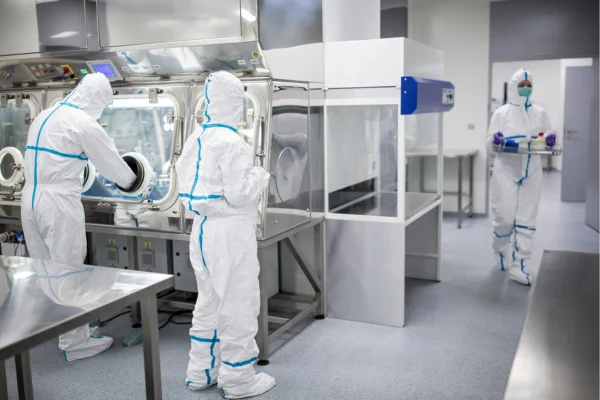
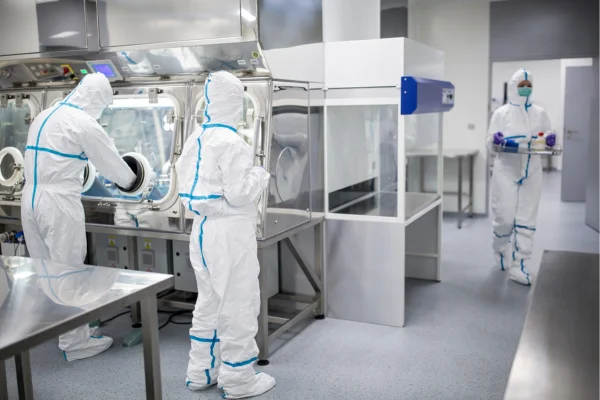
We offer an end-to-end solution that solves the common production hurdles of fragment-based drugs. Our services are anchored in our 20,000 m² state-of-the-art cGMP facility, where we combine scientific rigor with industrial scale.
- Customized Expression Systems: We utilize a variety of E. coli and yeast (Pichia pastoris, Saccharomyces cerevisiae) strains tailored to the specific folding requirements of your molecule. For Fab fragments, we optimize the co-expression of heavy and light chains to minimize aggregation.
- High-Density Fermentation: Our team achieves industry-leading volumetric productivity, with fermentation scales ranging from 7L to 2,000L. By reaching high OD600 values, we ensure that even complex fragments are produced at a cost-effective scale.
- Refining Purity: Using automated chromatography and high-resolution purification strategies, we achieve purity levels exceeding 99%. We ensure that host cell proteins, DNA, and endotoxins are strictly controlled, meeting global regulatory standards for human injectables.
Navigating Global Regulatory Standards
When you partner with us, you are leveraging a quality management system that has successfully passed over 100 audits from authorities such as the FDA, NMPA, and TGA. We understand that the transition to clinical trials requires more than just a product; it requires a comprehensive CMC package and a partner who understands international registration requirements.
At Yaohai Bio-Pharma, our philosophy is to “Serve with Heart.” We invite our partners to have their technical personnel stationed on-site, fostering a transparent and collaborative environment. Whether you are developing a novel nanobody for oncology or a Fab-based antidote for rapid neutralization, we are dedicated to providing the technical precision and industrial capacity to ensure your project’s success.
By choosing the right partner and the right molecular format, we can work together to bypass the traditional bottlenecks of drug development and bring life-changing therapies to patients faster.