In the evolving landscape of precision medicine, the camelid nanobody has transitioned from a biological curiosity to a cornerstone of modern diagnostics. Its compact size, high thermal stability, and unique ability to bind to “hidden” epitopes make it an ideal candidate for applications ranging from point-of-care (POC) lateral flow assays to high-throughput ELISA and advanced molecular imaging.
However, selecting the right nanobody for a diagnostic assay is a complex process that requires balancing biochemical affinity with industrial feasibility. Here is a guide to the key factors that define a successful selection strategy.
Epitope Accessibility and CDR3 Length
Traditional antibodies are often too bulky to reach the concave or “cryptic” active sites of enzymes and viral proteins. When selecting a camelid nanobody, the length and flexibility of the Complementarity-Determining Region 3 (CDR3) are paramount. Camelid VHH domains frequently feature an extended CDR3 loop that can penetrate deep into molecular crevices.
For diagnostic assays targeting small biomarkers or infectious agents with dense glycan shields, a nanobody with a long, finger-like CDR3 is often the superior choice. This structural advantage ensures high specificity, as the nanobody can bind to unique functional sites that are shielded from larger immunoglobulins.
Thermal and Chemical Stability
Diagnostic reagents must often withstand “cold chain” interruptions or harsh buffer environments during assay preparation. One of the primary reasons to choose a nanobody over a conventional antibody is its inherent robustness. Many nanobodies remain functional even after exposure to temperatures up to 90°C or extreme pH levels.
When evaluating candidates, researchers should perform stress-testing to ensure the molecule does not aggregate or lose binding affinity under the specific conditions of the intended assay—whether it be the acidic environment of certain biosensors or the high-salt buffers used in automated clinical analyzers.
Binding Affinity and Dissociation Rates
In diagnostics, the sensitivity of the test is directly linked to the binding affinity of the capture molecule. Selection should prioritize nanobodies with a low dissociation constant, typically in the nanomolar (nM) to picomolar (pM) range.
- For Capture Antibodies: A slow “off-rate” is critical to ensure the target remains bound throughout the washing steps of an ELISA or the flow-through of a lateral flow device.
- For Detection Antibodies: High “on-rates” are beneficial for rapid diagnostic tests where speed is of the essence.
Feasibility of Recombinant Expression
A nanobody that works perfectly in a small-scale pilot but fails to express in large quantities is a dead end for commercial diagnostics. Unlike conventional antibodies that require complex mammalian cell cultures, nanobodies are single-chain proteins that can be produced via recombinant protein manufacturing in microbial systems like E. coli or yeast.
Selection must include an early assessment of expression titers and solubility. Candidates that form inclusion bodies or require complex refolding steps may significantly drive up the cost of the final diagnostic kit, making them less competitive in the market.
Precision Selection with Yaohai Bio-Pharma
At Yaohai Bio-Pharma, we understand that a diagnostic assay is only as reliable as its biological components. As a leading CRDMO specialized in microbial expression, we provide a specialized platform for the discovery, selection, and large-scale manufacturing of high-affinity camelid nanobody candidates.
We help our partners bridge the gap between “good-on-paper” candidates and industrially viable products. Our technical expertise ensures that the nanobodies selected for your diagnostic applications are not only highly specific but also optimized for the rigors of GMP manufacturing.
Our Integrated Nanobody Discovery and Production Platform
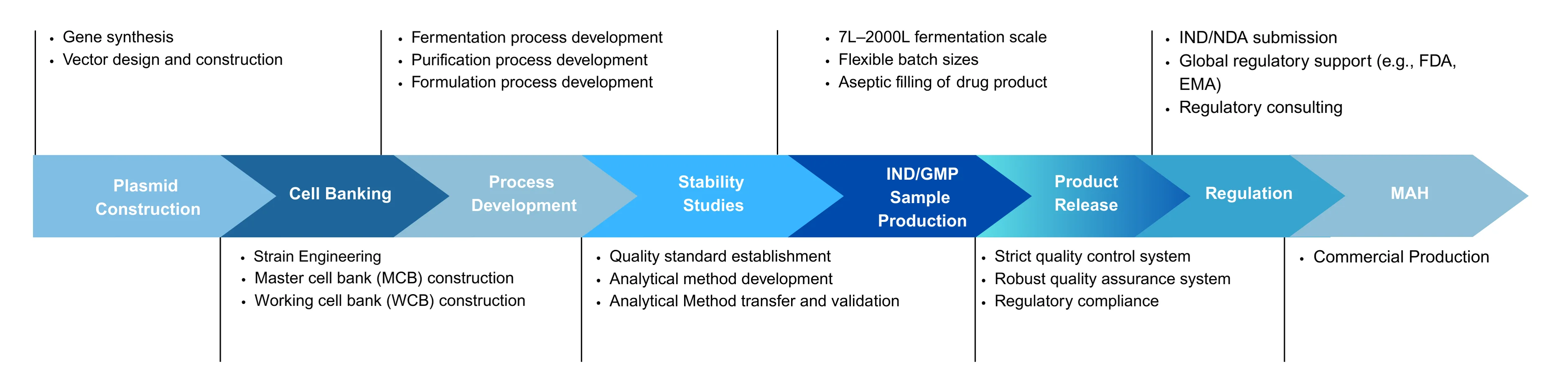
We offer an end-to-end “one-stop” service that covers the entire development cycle of a camelid nanobody. Our approach is designed to solve the bottlenecks of low yield and variable quality that often plague diagnostic reagent development.
- High-Diversity Library Construction: We establish high-quality VHH libraries using phage display or yeast surface display technologies. This allows us to screen millions of clones to identify the specific binders that meet your assay’s affinity and specificity requirements.
- Advanced Screening Strategies: We utilize both solid-phase and liquid-phase (biotin-streptavidin) screening methods. Liquid-phase screening is particularly effective for preserving the native conformation of delicate diagnostic targets, ensuring that the selected nanobody performs accurately in real-world samples.
- Scalable Recombinant Manufacturing: Our 20,000 m² state-of-the-art facility features 5 mature GMP production lines. We utilize high-density fermentation to achieve OD600 values up to 200, ensuring a cost-effective supply of high-purity nanobodies for global diagnostic markets.
Why Partner with Us for Your Diagnostic Needs?
The diagnostic industry requires a partner who understands both the science of immunology and the rigor of global regulatory standards. Yaohai Bio-Pharma has successfully passed over 100 audits from major authorities, including the FDA, NMPA, and TGA. This commitment to quality ensures that the nanobodies we produce for your kits are backed by the documentation needed for international market entry.
Our philosophy is to “Serve with Heart.” We foster a transparent, collaborative environment where client technical personnel are encouraged to be stationed on-site. This ensures that the selection process is perfectly aligned with the final assay format, whether you are developing a novel biosensor or a high-throughput clinical reagent.
By combining deep technical knowledge of camelid nanobody architecture with industrial-scale recombinant protein manufacturing, we empower our partners to bring more accurate, stable, and affordable diagnostics to the global healthcare front. Together, we are setting new standards for diagnostic precision.