The production of insulin is one of the greatest triumphs of modern biotechnology. Before the 1980s, the global supply of this life-saving hormone relied entirely on the extraction from the pancreases of slaughtered pigs and cows—a process that required over two tons of animal parts to produce just eight ounces of purified insulin. Today, recombinant insulin has fundamentally replaced animal-derived sources, offering a safer, more consistent, and infinitely scalable solution. However, the transition from lab-scale synthesis to massive industrial production introduces a unique set of “bottlenecks” that require advanced engineering to overcome.
The Complexity of Recombinant Insulin Production
Insulin is a relatively small but structurally complex protein. It consists of two polypeptide chains (A and B) linked by three specific disulfide bonds. In nature, the human body produces it as a single-chain precursor called proinsulin, which is then cleaved to its active form. Replicating this process via recombinant protein manufacturing involves hijacking the cellular machinery of microorganisms like Escherichia coli or yeast (Saccharomyces cerevisiae).
The primary challenge in insulin production is not just making the protein, but ensuring it folds correctly. When produced at high concentrations in bacteria, insulin precursors often aggregate into dense, insoluble “inclusion bodies.” While these inclusion bodies protect the protein from being degraded by the host cell’s enzymes, they require a meticulous “refolding” process. If the disulfide bonds do not form in exactly the right orientation, the resulting insulin will be biologically inactive.
Overcoming Scale-Up Bottlenecks
Moving from a 5-liter laboratory fermenter to a 2,000-liter industrial tank is not a linear transition. As the volume increases, several physical and biological hurdles emerge that can compromise yield and quality.
Oxygen Transfer and Heat Dissipation
In large-scale microbial fermentation, the metabolic activity of billions of cells generates significant heat and consumes oxygen at an incredible rate. If the oxygen transfer rate (OTR) cannot keep up with the demand, the cells switch to anaerobic metabolism, producing byproducts like ethanol or acetate that inhibit growth and reduce the quality of the recombinant insulin. Solving this requires specialized bioreactor designs with high-performance impellers and sophisticated sparging systems to ensure every cell has access to the nutrients it needs.
Genetic Stability over Generations
To fill a massive production tank, a single vial of engineered cells must divide dozens of times. During this “scale-up” expansion, there is a risk that the cells will lose the plasmid containing the insulin gene or that mutations will occur. High-tier manufacturing processes employ “selective pressure” and stable integration techniques to ensure that the 100th generation of cells is just as productive as the first.
Downstream Purification Efficiency
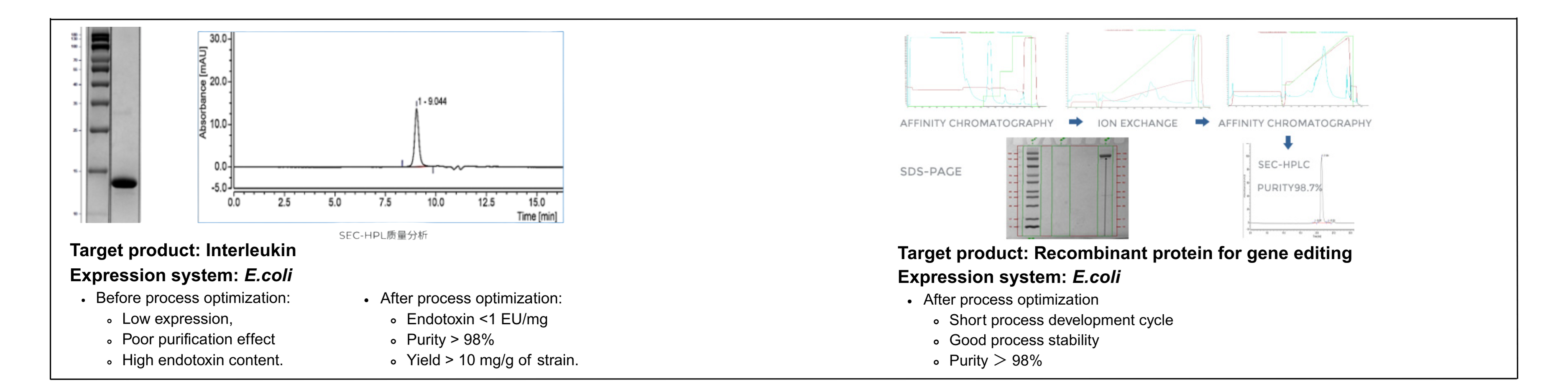
At the 2,000-liter scale, the “molecular soup” harvested from the fermenter contains not only the target proinsulin but also host cell proteins, DNA, and endotoxins. The purification bottleneck is often the most expensive part of the process. Manufacturers must utilize high-throughput chromatography systems that can handle large volumes while maintaining the ultra-high purity (>99%) required for human injectables.
Advancing Global Health with Yaohai Bio-Pharma
At Yaohai Bio-Pharma, we have positioned ourselves at the forefront of microbial CDMO services to address these exact scale-up challenges. We recognize that the global demand for insulin and its analogues (such as Glargine or Lispro) continues to grow, and our mission is to provide the technical infrastructure that makes these therapies accessible and affordable.
We specialize in high-density microbial fermentation, a core capability required for efficient recombinant protein manufacturing. Our facility is designed to bridge the gap between early-stage research and commercial-scale production, ensuring that your molecule remains stable and potent regardless of the production volume.
Our Industrial-Scale Capabilities
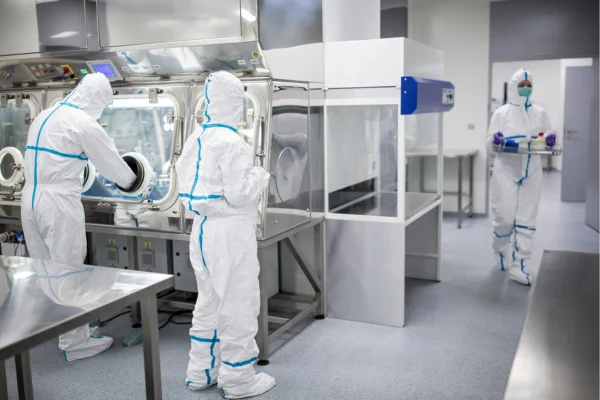
We operate a state-of-the-art 20,000 m² GMP-compliant production base, featuring five mature production lines dedicated to microbial systems. Our technical edge in recombinant insulin production and other complex proteins is supported by:
- Massive Fermentation Capacity: With a total scale exceeding 7,500L and individual fermenters ranging from 2L to 2,000L, we provide the flexibility to scale projects as they move from Phase I through to commercialization.
- High-Density Cultivation: We have mastered the art of “feeding” microbes to achieve OD600 values of up to 200. This high biomass concentration allows us to achieve superior volumetric yields, significantly lowering the cost per gram of the final product.
- Specialized Refolding Platforms: For proteins like insulin that form inclusion bodies, we have developed robust, high-efficiency refolding protocols that ensure correct disulfide bond formation at an industrial scale.
A Quality-First Approach to Manufacturing
In the biopharmaceutical industry, scale is meaningless without quality. At Yaohai Bio-Pharma, our quality management system is the backbone of our operation. We have successfully passed over 100 audits from global regulatory authorities, including the FDA, NMPA, and TGA. This ensures that every batch of recombinant insulin or protein we manufacture is backed by comprehensive documentation and rigorous analytical testing.
Our “one-stop” service platform covers the entire lifecycle of drug development—from strain engineering and cell banking to purification process development and final fill-and-finish. By keeping the entire process under one roof, we eliminate the risks associated with technology transfer and multiple vendors, accelerating the timeline to clinical trials.
Your Partner in Biopharmaceutical Innovation
We believe in “serving with heart.” This means we don’t just act as a contract manufacturer; we act as a strategic partner. We offer transparency by allowing customer technical personnel to be stationed on-site, fostering a collaborative environment where problems are solved in real-time.
As the industry moves toward more complex biosimilars and next-generation therapeutics, we remain committed to evolving our platforms. Whether you are developing a standard recombinant human insulin or a novel long-acting analogue, Yaohai Bio-Pharma provides the expertise and the scale to bring your vision to life. Together, we are overcoming the technical bottlenecks of today to ensure a healthier tomorrow for patients worldwide.