In the competitive landscape of industrial biotechnology and clinical diagnostics, enzymes are the functional workhorses that drive critical reactions. When developing a new product, one of the first strategic decisions is whether to source native enzymes from natural tissues or invest in recombinant protein manufacturing for engineered versions. While native enzymes provide a snapshot of biological authenticity, the recombinant approach has revolutionized the industry by addressing fundamental limitations in supply, purity, and performance.
The Biological “Authenticity” of Native Enzymes
Native enzymes are isolated directly from their original biological source—be it animal organs, plant tissues, or wild-type microorganisms. The primary argument for using native enzymes is their structural authenticity. Because they are produced in their original cellular environment, they naturally possess the exact post-translational modifications (PTMs) and folding patterns required for their function in vivo.
However, this “natural” source is often the very bottleneck that hinders commercial success. Sourcing native enzymes frequently involves complex extraction processes from variable raw materials, leading to significant lot-to-lot inconsistency. Furthermore, the supply is often limited by the availability of the source organism, making it difficult to scale production for a global market. For many manufacturers, the risk of “contaminating” enzymes—where a native preparation contains trace amounts of other enzymes from the same tissue—is a major technical challenge that can interfere with sensitive diagnostic assays.
Why Recombinant Protein Manufacturing is the Modern Choice
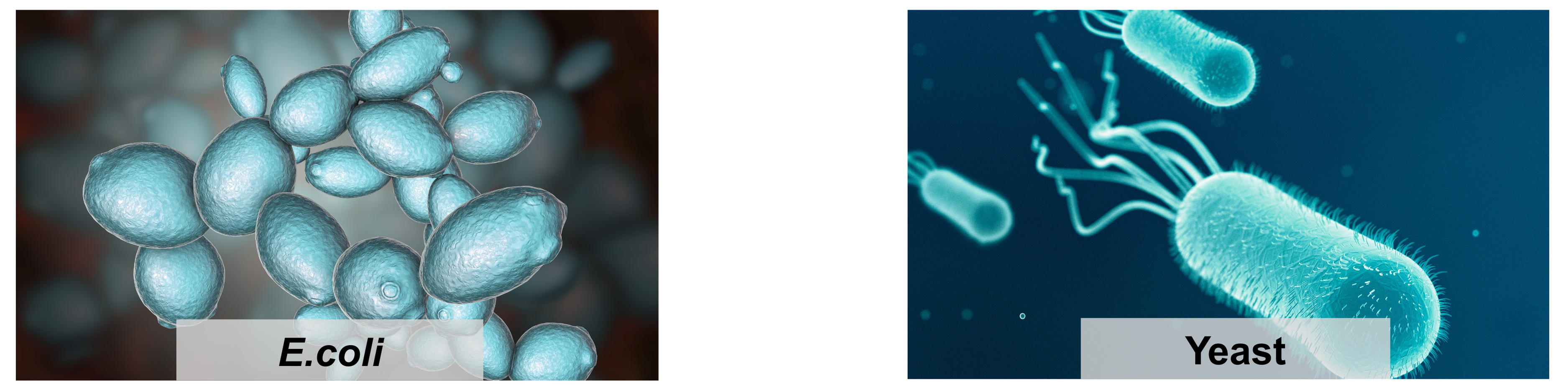
The shift toward recombinant enzyme production has solved many of the inherent weaknesses of native sourcing. By inserting the gene for a specific enzyme into a controlled host system like E. coli or yeast, manufacturers can create a highly standardized production “factory.”
The advantages of the recombinant approach include:
- Purity and Specificity: In a recombinant system, the host organism is often chosen because it does not naturally produce the enzyme of interest. This allows for a much cleaner starting material and eliminates the risk of cross-contaminating activities that often plague native extracts.
- Scalability and Cost: Once a high-yielding strain is established, production can be scaled up to thousands of liters in controlled fermenters. This “scale economy” significantly reduces the cost per unit compared to the expensive and labor-intensive extraction from natural tissues.
- Engineered Enhancement: Unlike native enzymes, which are fixed by evolution, recombinant enzymes can be “optimized.” Through genetic engineering, scientists can improve thermal stability, enhance catalytic activity, or add affinity tags (like His-tags) to simplify the purification process.
| Feature | Native Enzymes | Recombinant Enzymes |
| Source | Natural tissues/organisms | Engineered host cells (E. coli, yeast) |
| Consistency | Variable (lot-to-lot differences) | High (standardized GMP process) |
| Purity | May contain co-purified proteins | Highly pure; no “background” enzymes |
| Scalability | Limited by natural source supply | Virtually unlimited via fermentation |
| Customization | No modification possible | Highly customizable via gene editing |
Overcoming the PTM Bottleneck
A common critique of microbial recombinant systems is their inability to perform complex eukaryotic post-translational modifications, such as specific glycosylation. This is where the choice of the expression host becomes vital. While E. coli is the “gold standard” for simple, high-yield enzymes, yeast systems like Pichia pastoris offer a middle ground—providing the scalability of microbes with the ability to perform many essential eukaryotic modifications. By selecting the right platform, researchers can ensure that their recombinant enzyme maintains its native-like activity while benefiting from the superior logistics of recombinant manufacturing.
Empowering Your Pipeline with Yaohai Bio-Pharma
At Yaohai Bio-Pharma, we recognize that the choice between native and recombinant isn’t just a scientific question—it’s a business one. As a leading CRDMO specializing in microbial expression systems, we help our partners transition away from the unpredictability of native sourcing toward a robust, scalable, and compliant manufacturing model.
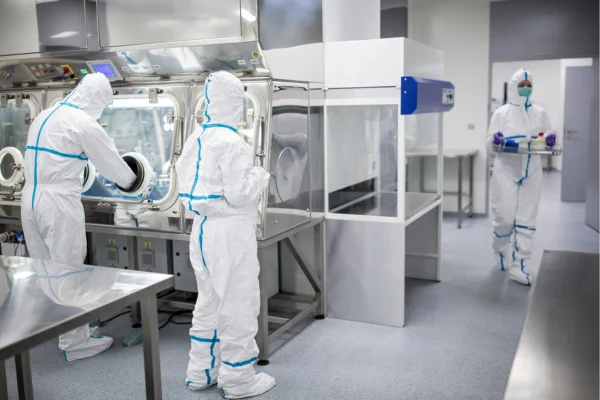
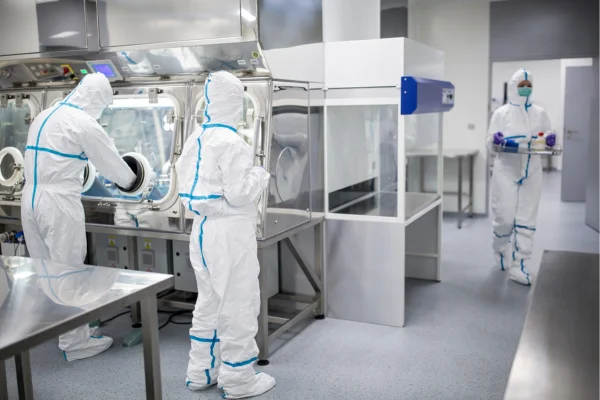
We have built a comprehensive platform for recombinant protein manufacturing that is specifically designed to handle the complexities of industrial and therapeutic enzymes. Our 20,000 m² state-of-the-art facility is equipped to take your project from initial gene synthesis through to large-scale GMP production.
Our Technical Advantage in Enzyme Production
Our expertise lies in our ability to squeeze the maximum potential out of microbial hosts. We utilize high-density fermentation techniques that can achieve cell densities (OD600) of up to 200, ensuring that even “difficult-to-express” enzymes are produced at commercially viable titers.
At Yaohai Bio-Pharma, our “one-stop” service includes:
- Strain Engineering: We optimize the genetic sequence and select the best promoters to ensure your enzyme is expressed in its most active form.
- Process Development: We bridge the gap between lab-scale discovery and industrial reality, using 50L to 2,000L fermentation lines to prove scalability.
- High-Resolution Purification: Our downstream suites utilize automated chromatography to reach purity levels exceeding 99%, stripping away host cell proteins and nucleic acids that can interfere with your final application.
A Commitment to Global Quality
Navigating the transition to recombinant manufacturing requires a partner who understands the regulatory landscape. We have successfully passed over 100 audits from major global authorities, including the FDA, NMPA, and TGA. This means the data we generate and the products we manufacture meet the highest international standards, giving you a clear path to market whether you are in diagnostics, therapeutics, or industrial biocatalysis.
By partnering with us, you gain access to an integrated ecosystem that values intellectual property protection and technical transparency. We don’t just act as a “factory”; we act as your technical consultants, helping you decide which expression host or purification strategy will best suit your specific application.
In the end, while native enzymes served as the foundation of biotechnology, the future belongs to the precision and reliability of the recombinant approach. At Yaohai Bio-Pharma, we are dedicated to “serving with heart” and providing the world-class manufacturing infrastructure needed to bring your innovative enzyme products to life.