In the competitive biopharmaceutical landscape, transitioning a molecule from a laboratory concept to a commercially viable product is perhaps the most challenging phase of drug development. The complexity of biological systems means that even a minor change in fermentation or filtration can drastically alter a protein’s efficacy. Consequently, choosing a collaborator for protein process development is not merely a procurement decision; it is a strategic maneuver that can determine the clinical and financial trajectory of a therapeutic program.
To ensure your molecule survives the “valley of death” between discovery and the clinic, here are the top seven factors to consider when evaluating a partner.
Robustness of the Expression System
The foundation of any successful process is the host organism. Whether using Escherichia coli, Pichia pastoris, or Saccharomyces cerevisiae, your partner must demonstrate deep genetic engineering expertise. A superior partner won’t just offer a standard strain; they will provide codon optimization, signal peptide screening, and promoter selection to maximize initial titers. If the starting expression level is too low, no amount of downstream optimization can make the process economically sustainable.
Scalability and Scale-Down Modeling
A common pitfall in recombinant protein manufacturing is the failure of a process to behave consistently when moving from a 5L benchtop fermenter to a 2,000L industrial tank. A high-tier development partner utilizes sophisticated “scale-down” models to mimic large-scale conditions (such as oxygen transfer rates and nutrient gradients) at a smaller volume. This allows for predictive troubleshooting and ensures that the transition to GMP manufacturing is seamless and predictable.
Comprehensive Downstream Strategy
Purification is often where the most significant product loss occurs. Your partner should be proficient in a “Capture, Intermediate Purification, and Polishing” (CIPP) strategy. Look for expertise in diverse chromatography techniques—such as Affinity, Ion Exchange (IEX), and Hydrophobic Interaction (HIC)—as well as advanced filtration methods like Tangential Flow Filtration (TFF). The goal is to achieve >99% purity while maintaining high step yields, which is critical for controlling the Cost of Goods (COGS).
Integrated Analytical Development
Process development cannot happen in a vacuum; it must be guided by robust analytics. A partner should have the in-house capability to perform complex characterization, including Mass Spectrometry for intact mass analysis, HPLC for purity, and bioassays to confirm functional activity. If a partner has to outsource analytical testing, it creates a feedback loop delay that can significantly extend your development timeline.
Mastery of Inclusion Body Refolding
Many high-value proteins expressed in microbial systems aggregate into insoluble “inclusion bodies.” While this can be a hurdle, it also offers a path to extremely high purity if handled correctly. A specialized partner must have a proven track record in complex refolding chemistry—optimizing redox buffers, protein concentration, and temperature to “rescue” bioactive proteins from these aggregates with high efficiency.
Quality Management and Regulatory Pedigree
In the B2B biopharma world, “Quality” is a culture, not just a department. Your partner’s facility should operate under global GMP standards and have a history of successful inspections by major regulatory bodies like the FDA, NMPA, or EMA. This ensures that the data generated during process development is “filing-ready,” reducing the risk of clinical holds or regulatory rejection during the IND or BLA stages.
Intellectual Property and Data Transparency
Finally, transparency is the bedrock of a successful partnership. A reliable collaborator ensures full IP ownership for the client and provides detailed “Tech Transfer” packages. You should have real-time access to your project’s data and a dedicated project management team that communicates technical setbacks as proactively as they do successes.
Partnering with Yaohai Bio-Pharma for Excellence
At Yaohai Bio-Pharma, we have built our reputation as a premier CRDMO by focusing exclusively on the nuances of microbial expression. We understand that every recombinant protein carries a unique set of challenges, from metabolic burden in the host cell to sensitive folding pathways in the purification suite. Our goal is to solve these problems through scientific rigor and industrial-scale precision.
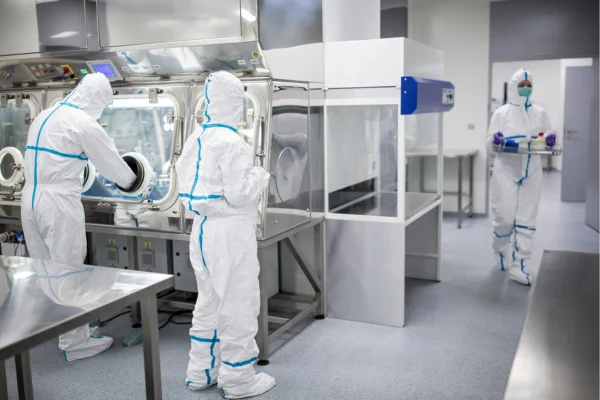
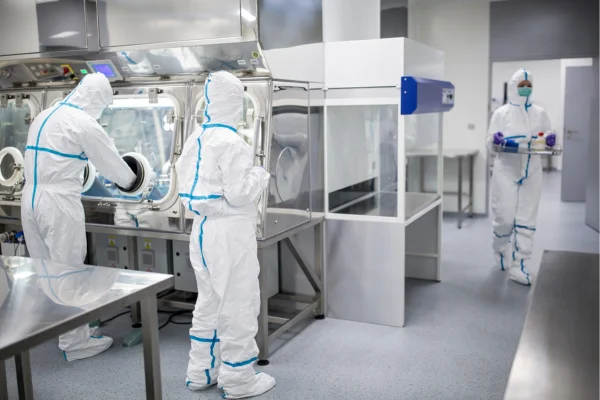
We provide a “one-stop” platform where protein process development is fully integrated with our large-scale manufacturing capabilities. Our 20,000 m² cGMP facility features five mature production lines with a total fermentation capacity exceeding 7,500L. This scale allows us to support our partners from the initial strain construction through to Phase III clinical supply and commercialization.
Our Technical Advantage in Recombinant Protein Manufacturing
What sets us apart is our deep specialized knowledge in microbial systems. While many CDMOs try to cover every modality, we have mastered E. coli and yeast expression to a degree that allows us to achieve OD600 values up to 200 through high-density fermentation. This directly translates to higher protein yields and lower costs for our clients.
In the purification phase, we utilize automated chromatography systems and high-potency manufacturing suites to ensure maximum recovery and purity. Whether we are working on recombinant enzymes, nanobodies, or complex vaccines, our processes are designed with “Quality by Design” (QbD) principles from day one.
Global Standards, Personalized Service
We believe in “Establishing Global Standards” while maintaining the agility of a focused technical team. Yaohai Bio-Pharma has successfully passed over 100 audits from international regulatory bodies, including the FDA, NMPA, TGA, and MFDS. This track record gives our global partners the confidence that their molecules are being developed in an environment of absolute compliance.
Our philosophy is simple: we “Serve with Heart.” This means providing our partners with not just a service, but a collaborative ecosystem where technical personnel can even be stationed on-site to witness the progress of their projects. By eliminating the bottlenecks of technology transfer and regulatory uncertainty, we empower our clients to focus on what they do best—innovating the next generation of life-changing medicines.