In the rapidly expanding sectors of gene therapy and mRNA vaccine production, plasmid DNA (pDNA) has transitioned from a laboratory tool to a critical high-stakes pharmaceutical ingredient. Whether used as a template for mRNA synthesis or as a vector for viral delivery, the quality of plasmid DNA is non-negotiable. To achieve this, GMP plasmid manufacturing must adhere to rigorous biosafety and quality standards to ensure that the final product is free from adventitious agents and cross-contamination.

The Foundation of Biosafety in Plasmid Production
Biosafety in a manufacturing context is about containment and control. Unlike R&D environments, a Good Manufacturing Practice (GMP) facility must guarantee a “closed-loop” system where the biological agent—typically an engineered Escherichia coli strain—remains segregated from the environment and other production lots.
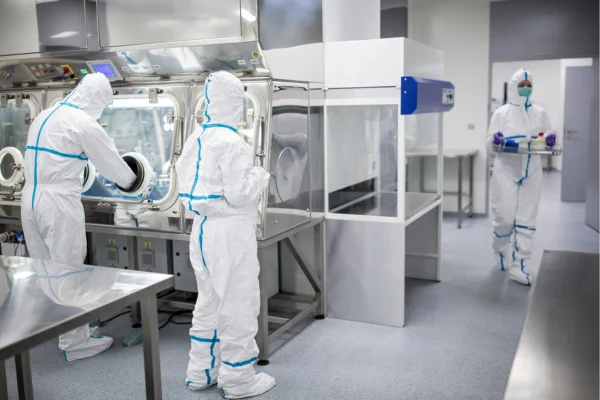
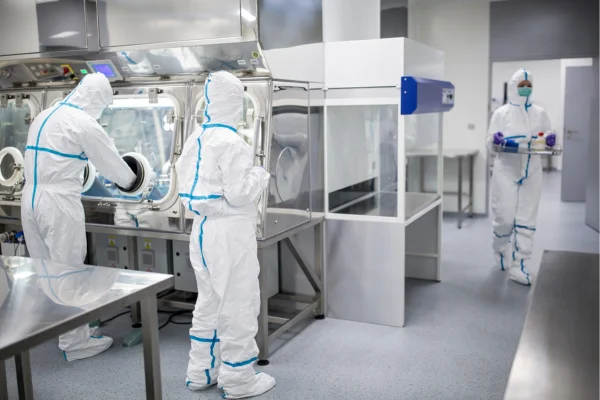
The first pillar of biosafety is facility design. A modern facility must utilize a “zonal” approach, separating upstream processes (fermentation) from downstream processes (purification and fill-finish). This prevents the high microbial load present during fermentation from compromising the high-purity environment required for the final drug substance. Key engineering controls include:
- Pressure Cascades: Maintaining positive pressure in cleanrooms relative to corridors to prevent the ingress of airborne contaminants.
- HVAC Systems: High-efficiency particulate air (HEPA) filtration and dedicated air handling units for separate manufacturing suites to prevent cross-contamination.
- Material and Personnel Flow: Strict unidirectional movement of staff and materials to ensure that “dirty” waste flows do not cross paths with “clean” raw materials.
Mitigating Risks in Plasmid DNA Manufacturing
Beyond the physical architecture, operational best practices are essential to manage the biological risks inherent in plasmid DNA manufacturing. The most significant risk in microbial production is the presence of host cell contaminants, such as genomic DNA (gDNA), host cell proteins (HCPs), and endotoxins.
To mitigate these, a robust biosafety program focuses on the following:
- Traceability and Strain Stability: Every manufacturing run begins with a well-characterized Master Cell Bank (MCB). Ensuring the genetic stability of the host strain and the clear traceability of the plasmid sequence is vital. This prevents “genetic drift,” where mutations could potentially create unexpected biological properties or reduce the safety profile of the plasmid.
- Animal-Free and Antibiotic-Free Systems: Traditional fermentation often utilized animal-derived components (like bovine serum) and antibiotics (like ampicillin) for selection. Modern biosafety best practices advocate for animal-origin-free (AOF) media to eliminate the risk of Transmissible Spongiform Encephalopathy (TSE) and Bovine Spongiform Encephalopathy (BSE). Additionally, transition toward antibiotic-free selection systems prevents the risk of residual antibiotic contamination in the final therapeutic product.
- Single-Use Technologies (SUT): One of the most effective ways to solve the cross-contamination bottleneck is the adoption of single-use fermenters and bags. By using disposable components, manufacturers eliminate the need for complex “cleaning-in-place” (CIP) validations and drastically reduce the risk of batch-to-batch carryover.
Regulatory Compliance and Quality Oversight
A GMP facility is not defined by its equipment alone but by its Quality Management System (QMS). In the context of biosafety, this involves continuous environmental monitoring (EM) for microbial counts, particulates, and surface cleanliness. Any deviation from these predefined limits triggers an immediate investigation to ensure that product integrity has not been breached.
The regulatory landscape for plasmids—governed by bodies such as the FDA, EMA, and NMPA—requires that every step of the process be documented with a paper trail that proves “safety by design.” This includes rigorous testing for sterility, mycoplasma, and adventitious viruses, ensuring that the plasmid is safe for its intended clinical use.
Yaohai Bio-Pharma: Your Trusted Partner in GMP Plasmid Manufacturing
As a leading microbial CRDMO, we at Yaohai Bio-Pharma have built our infrastructure around the core principles of safety, compliance, and technical excellence. We understand that in the world of advanced therapies, there is no margin for error.
We operate a massive 20,000+ m² state-of-the-art cGMP production platform that is specifically engineered to handle the complexities of GMP plasmid manufacturing. Our facilities include dedicated Bio-Safety Level 2 (BSL-2) laboratories and high-potency manufacturing suites designed to protect both the product and our operators.
Our Technical Edge and Capacity
At Yaohai Bio-Pharma, we provide an end-to-end “one-stop” solution for plasmid DNA. From initial DNA design and strain engineering to large-scale GMP production and aseptic filling, our platform is built to support your project at every phase.
- Diverse Scale Capabilities: We offer a flexible range of fermentation scales, from 7L to 2,000L. Our 5 mature GMP production lines allow us to transition projects seamlessly from preclinical research to commercial-scale supply.
- High-Density Fermentation: We have perfected the art of high-density cultivation, achieving plasmid yields of up to 600mg/L. Our processes are designed to be antibiotic-free and animal-derived ingredient-free, meeting the most stringent global safety requirements.
- Quality and Compliance: Our quality system has successfully passed over 100 audits from global authorities including the FDA, NMPA, and TGA. This track record demonstrates our commitment to maintaining the highest biosafety standards in the industry.
Empowering Global Innovation
We believe that the future of medicine lies in the precision of nucleic acid drugs. To support this, we have established a robust CMC (Chemistry, Manufacturing, and Controls) platform that ensures every batch of plasmid we produce meets the critical quality attributes (CQAs) for supercoiled content, purity, and safety.
By choosing us as your partner, you gain access to a collaborative ecosystem. We allow client technical personnel to be stationed on-site, fostering a transparent environment where we work as an extension of your own team. Our goal is to “serve with heart” and provide the world-class plasmid DNA manufacturing services needed to bring life-saving therapies to patients across the globe.
In a field where biosafety and quality are the foundations of success, we remain dedicated to setting the global standard for microbial expression and nucleic acid production.