In the intricate world of biopharmaceutical manufacturing, the bridge between a successful clinical trial and a life-saving commercial drug is built on the foundation of Good Manufacturing Practice (GMP). Unlike early-stage research, where flexibility and speed are prioritized, GMP production is governed by a rigid framework of quality assurance designed to ensure that medicinal products are consistently produced and controlled to the highest quality standards.
A GMP manufacturing process is not just a set of instructions for making a drug; it is a holistic system that encompasses people, premises, processes, procedures, and products. In the B2B sector, understanding the nuances of this system is essential for developers looking to navigate the transition from bench-scale discovery to large-scale market availability.
The Anatomy of a GMP Manufacturing Process
At its core, GMP is designed to minimize the risks inherent in pharmaceutical production—risks that cannot be eliminated through final product testing alone. These risks include unexpected contamination, incorrect labeling, and potency variations. To mitigate these, a compliant manufacturing process must adhere to several key pillars:
- Strict Documentation and Traceability: Every action in a GMP environment must be recorded. From the source of raw materials to the exact temperature of a bioreactor at a specific minute, documentation provides a “paper trail” (or digital audit trail) that ensures every batch can be traced back to its origin.
- Validated Equipment and Facilities: In a GMP manufacturing process, every piece of equipment—from a simple pipette to a 2,000L fermenter—must be qualified (IQ/OQ/PQ). This ensures that the equipment is installed correctly, operates as intended, and performs consistently under production conditions.
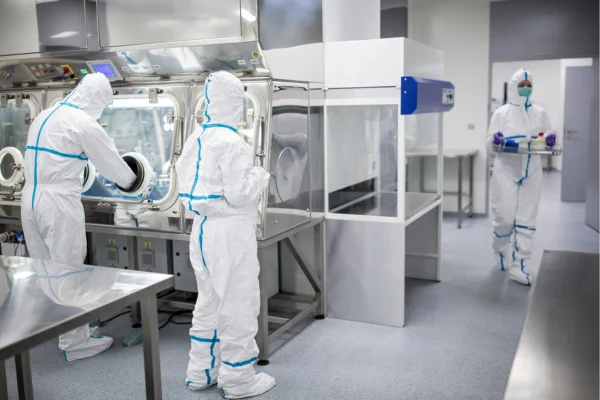
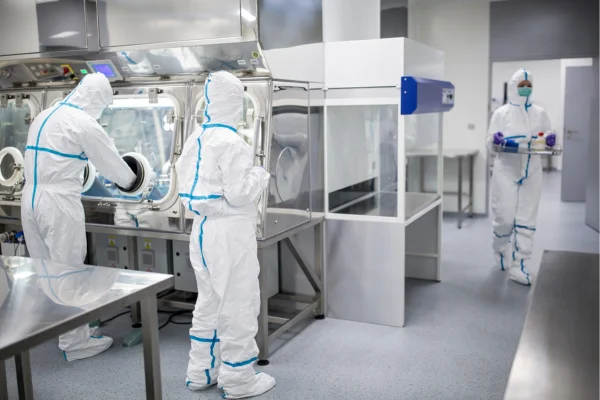
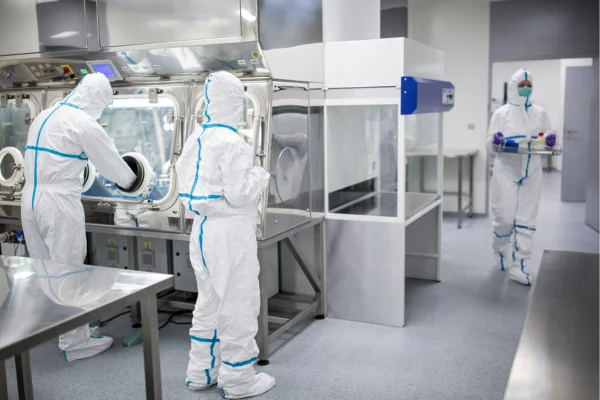
- Controlled Environments: Biopharmaceutical production often requires “cleanroom” environments. These facilities use HEPA filtration and strict pressure differentials to prevent cross-contamination from the outside world or between different production lines.
- Personnel Training: Even the best equipment cannot compensate for human error. GMP mandates that all staff are rigorously trained on Standard Operating Procedures (SOPs) and hygiene protocols to maintain the integrity of the sterile environment.
How to Optimize the Manufacturing Process for Scale
Optimization is the process of making a manufacturing workflow more efficient, cost-effective, and robust without compromising quality. In the context of biologics, where living cells are the “factories,” optimization is a delicate balance of biology and engineering.
Upstream Optimization (Fermentation Optimization) often begins in the bioreactor. By refining the media formulation—the nutrient broth the cells consume—scientists can dramatically increase the “titer,” or the concentration of the drug produced. Utilizing Design of Experiments (DoE) allows for the simultaneous testing of multiple variables (such as pH, dissolved oxygen, and temperature) to find the “sweet spot” for maximal productivity.
Downstream Optimization (Purification) As production scales up, the purification process must also be optimized to handle higher volumes. This may involve switching to high-capacity chromatography resins or implementing tangential flow filtration (TFF) systems. The goal is to maximize the recovery of the pure drug substance while minimizing the loss of material during the multiple cleaning steps.
Process Intensification Modern optimization also looks at “intensifying” the process. This might include moving from traditional “batch” processing to “fed-batch” or even continuous manufacturing. These methods keep the cells in a high-productivity state for longer periods, significantly increasing the output of a single GMP production run.
Excellence in Global GMP Production with Yaohai Bio-Pharma
At Yaohai Bio-Pharma, we believe that a robust GMP manufacturing process is the ultimate guarantee of patient safety. As China’s leading microbial CDMO, we have spent over a decade perfecting our manufacturing platform to support the global development of recombinant proteins, plasmid DNA, and innovative vaccines.
Our 20,000 m² state-of-the-art production base is designed to provide end-to-end solutions that grow with our partners. We operate a cGMP clinical and commercial microbial production platform with capacities reaching over 7,500 liters. This scale allows us to support projects from initial Phase I clinical samples through to full-scale commercialization.
When you partner with us, you are leveraging a facility that has successfully passed over 100 audits from the world’s most stringent regulatory bodies, including the FDA, NMPA, TGA, and MFDS. Our commitment to global compliance is reflected in our:
- Advanced Infrastructure: We offer BSL-2 labs for pathogenic bacteria, explosion-proof facilities, and high-potency manufacturing suites.
- Integrated Quality Management: Our quality systems ensure full traceability and data integrity (ALCOA+), providing our partners with “submission-ready” data for their regulatory filings.
- Flexible Scale-Up: We understand that the path to market isn’t always linear. Our fermentation systems (ranging from 50L to 2,000L) and high-speed filling lines (up to 300 vials/min) provide the flexibility needed to meet evolving clinical demands.
At Yaohai Bio-Pharma, our mission is to establish global standards and boost the new drug development process. We don’t just provide GMP production services; we provide the technical depth and regulatory foresight needed to turn complex molecules into life-saving realities. By bridging the gap between innovative science and industrial-scale manufacturing, we empower our partners to deliver high-quality medicines to patients worldwide.