Developing a biopharmaceutical product requires more than successful research results. A process that works at laboratory-scale must also achieve consistent quality, regulatory compliance, and production efficiency when moving toward clinical and commercial manufacturing. This transition is one of the most important challenges in biopharmaceutical manufacturing.
A scalable manufacturing process enables organizations to expand production capacity while maintaining product quality and process reliability. From microbial expression system development to GMP production, every stage requires careful planning, optimization, and validation to reduce risks during scale-up.

What Makes a Biopharmaceutical Manufacturing Process Scalable?
Scalability refers to the ability to transfer and expand a production process from small research batches to larger manufacturing volumes without significant changes in product characteristics. A scalable process should maintain stable performance across different production scales, including yield, purity, potency, and safety requirements.
Several factors influence scalability. The selection of an appropriate expression system, optimization of upstream and downstream processes, equipment compatibility, and quality control strategies all contribute to successful manufacturing expansion.
For example, microbial expression platforms require precise control of fermentation conditions, including temperature, nutrient supply, oxygen levels, and process parameters. Small variations during scale-up can affect protein expression levels and product quality. Therefore, establishing a robust process development strategy at an early-stage is essential.
Key Steps in Building a Scalable Manufacturing Platform
Establishing a Reliable Upstream Process
The upstream process is the foundation of biopharmaceutical manufacturing. It includes cell or strain development, cell banking, fermentation, and process optimization.
A well-designed upstream process focuses on improving productivity while ensuring consistency between batches. This involves selecting suitable production strains, optimizing culture conditions, and defining critical process parameters.
During scale-up, manufacturers must evaluate how laboratory conditions translate into larger bioreactors. Factors such as mixing efficiency, oxygen transfer, and heat distribution may change significantly as production volume increases. A systematic approach helps identify potential challenges before commercial manufacturing begins.
Optimizing Downstream Purification Processes
After biological production, downstream processing is responsible for separating and purifying the target product. Efficient purification is critical for achieving the required quality standards.
Scalable downstream processes typically involve multiple purification steps, such as chromatography, filtration, and concentration. Each step needs to be optimized for recovery rate, impurity removal, and process consistency.
A strong purification strategy should balance product quality with manufacturing efficiency. Excessive complexity can increase production costs and operational challenges, while insufficient purification may affect product safety and regulatory acceptance.
Designing Manufacturing Processes for GMP Compliance
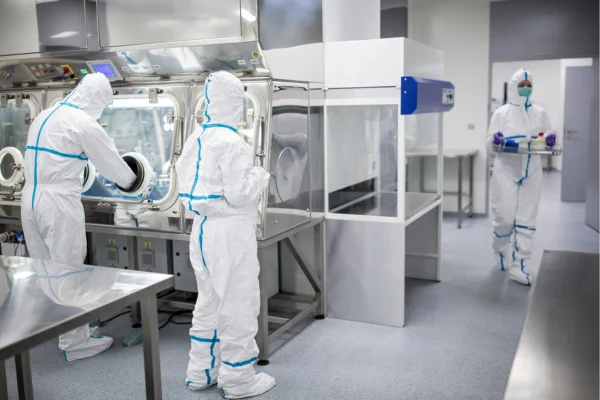
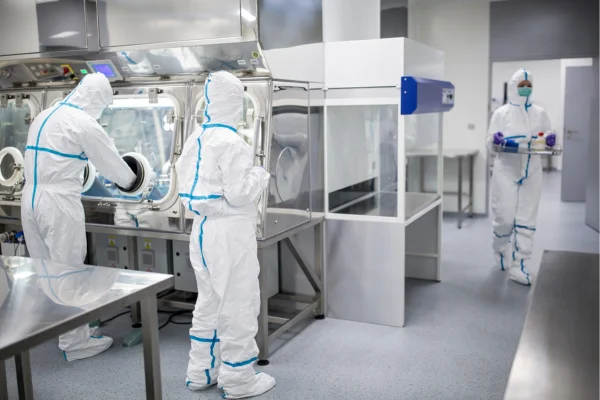
GMP compliance is a fundamental requirement for biopharmaceutical manufacturing. A scalable process must be supported by a comprehensive quality management system, validated procedures, and appropriate documentation.
Regulatory expectations require manufacturers to demonstrate control over raw materials, production processes, testing methods, and facility operations. Building compliance into the process from the beginning can reduce delays during clinical development and commercialization.
Yaohai Bio-Pharma provides GMP manufacturing solutions covering drug substance production and drug product manufacturing. Its platform supports different production stages with flexible bioreactor scales from 50L to 2000L and facilities tailored to global GMP requirements.
Challenges in Biopharmaceutical Manufacturing Scale-Up
Maintaining Product Consistency
One of the biggest challenges during scale-up is ensuring that products manufactured at different scales have comparable quality attributes. Changes in production conditions may influence molecular characteristics, biological activity, or impurity profiles.
To address this challenge, manufacturers need advanced analytical methods and process monitoring systems. Early identification of critical quality attributes helps maintain consistency throughout development.
Managing Technology Transfer
Technology transfer connects research and manufacturing teams by moving processes from development laboratories to production facilities. Poorly planned technology transfer can lead to delays, increased costs, and unexpected process issues.
A successful transfer requires detailed process documentation, clear communication, and technical expertise. Manufacturing partners with experience across development and commercial stages can help improve transfer efficiency.
Preparing for Commercial Demand
A process suitable for clinical supply may not always meet future commercial requirements. Organizations need to consider production capacity, facility flexibility, supply chain stability, and long-term manufacturing strategies.
Flexible manufacturing platforms allow adjustments based on product demand and development progress. This approach supports smoother transitions from early clinical batches to larger commercial production.
How Integrated Manufacturing Platforms Support Growth
An integrated manufacturing platform combines process development, analytical testing, GMP production, and quality management into a coordinated workflow. This reduces the complexity of managing multiple suppliers and helps maintain-process continuity.
For biopharmaceutical developers, selecting a manufacturing partner with broad technical capabilities can provide support throughout the product lifecycle. From initial process optimization to commercial-scale production, integrated services help improve efficiency and reduce operational risks.
Yaohai Bio-Pharma offers end-to-end CRDMO services covering microbial strain engineering, process development, analytical testing, and GMP manufacturing for various biologics, including recombinant proteins, peptides, plasmid DNA, and other advanced products.
Conclusion
Building scalable biopharmaceutical manufacturing processes requires a combination of scientific expertise, process optimization, regulatory understanding, and manufacturing flexibility. A successful scale-up strategy ensures that products can move efficiently from research stages to clinical supply and commercial production while maintaining consistent quality.
With experience in microbial expression systems, GMP manufacturing platforms, and integrated development services, Yaohai Bio-Pharma supports partners in establishing reliable and scalable biopharmaceutical manufacturing processes for different development needs.