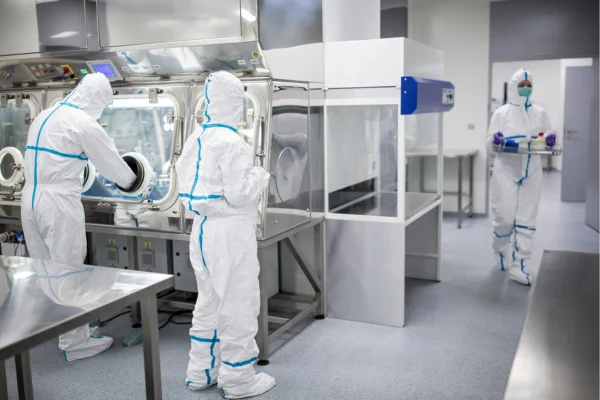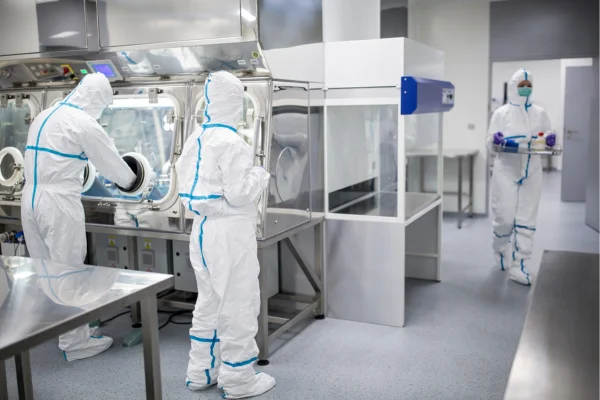
A GMP manufacturing facility is designed to ensure that every stage of drug production meets strict quality, safety, and regulatory requirements. From raw material preparation to final product release, every activity follows controlled procedures to minimize risks and maintain product consistency.
For companies developing biologics, understanding what happens inside a GMP manufacturing facility can help evaluate manufacturing capabilities, quality standards, and production reliability. The GMP manufacturing process is not only about operating advanced equipment. It involves a complete quality system that integrates facility design, personnel training, production procedures, testing methods, and documentation control.
Facility Design and Environmental Control
The foundation of a GMP manufacturing facility is its controlled production environment. Pharmaceutical manufacturing requires carefully designed areas to prevent contamination and maintain stable production conditions.
Inside the facility, different production zones are separated according to their functions and cleanliness requirements. Air handling systems, water systems, material flows, and personnel movement are carefully designed to reduce potential risks during manufacturing.
Environmental monitoring is also an important part of daily operations. Parameters such as temperature, humidity, air quality, and microbial levels are regularly monitored to confirm that production conditions remain within established standards.
A well-designed facility supports consistent manufacturing performance by creating a controlled environment where processes can be performed with predictable results.
Raw Material Management and Preparation
The GMP manufacturing process begins with strict control of raw materials. Before materials enter production, they must undergo qualification, testing, and approval procedures.
Manufacturing teams verify the identity, quality, and storage conditions of materials to ensure they meet predefined specifications. Proper labeling, tracking, and documentation allow each material to be traced throughout the entire production process.
For biologics manufacturing, raw materials such as cell banks, microbial strains, culture media, and other production components require careful management because variations can influence product quality.
A strong material management system helps ensure that only approved materials are used and that every production batch can be accurately reviewed.
Upstream Manufacturing: Building the Production Process
In biologics production, the upstream stage focuses on growing biological systems that produce the target molecule. This process may involve microbial fermentation or other expression systems depending on the product type.
During this stage, manufacturers carefully control key parameters such as temperature, pH, oxygen levels, nutrient supply, and fermentation time. Advanced monitoring systems help operators maintain optimal conditions throughout production.
Scale-up is another important consideration. A process that works successfully at laboratory-scale must be transferred to larger production equipment while maintaining product quality and process consistency.
Yaohai Bio-Pharma provides GMP manufacturing capabilities covering different production scales, including bioreactor capacities from 50L to 2000L, supporting different stages from clinical development to commercial production.
Downstream Processing and Purification
After the target product is produced, downstream processing begins. This stage focuses on separating, purifying, and concentrating the desired molecule.
Typical downstream activities may include filtration, chromatography, ultrafiltration, and other purification steps. Each operation is carefully controlled and validated to achieve the required product quality.
Purification is especially important for biologics because impurities or process-related substances must be effectively removed. Manufacturers use analytical testing methods to confirm that the product meets established quality standards.
A well-developed downstream process improves production efficiency while maintaining consistency between different batches.
Quality Control Throughout the Manufacturing Process
Quality control is integrated into every part of the GMP manufacturing process rather than performed only at the end. Samples are collected during different production stages and tested using validated analytical methods.
Quality control teams evaluate factors such as product identity, purity, potency, safety, and stability. These testing activities provide evidence that the manufacturing process remains within approved specifications.
In addition, GMP facilities maintain detailed documentation for every manufacturing activity. Production records, testing results, equipment maintenance information, and process changes are carefully reviewed and stored.
This documentation system supports regulatory compliance and provides transparency throughout the product lifecycle.
Aseptic Processing and Final Product Manufacturing
For products requiring sterile delivery forms, aseptic processing is a critical stage inside a GMP manufacturing facility. This involves strict control of environmental conditions, equipment preparation, and operator procedures.
The final manufacturing stage may include formulation, sterile filling, packaging, and inspection. Each step must follow validated procedures to protect product quality.
Yaohai Bio-Pharma operates an aseptic drug product facility designed to support vial, pre-filled syringe, and cartridge manufacturing while meeting international GMP requirements.
Personnel Training and Compliance Management
People are one of the most important elements of GMP manufacturing. Employees working inside GMP facilities must receive continuous training on production procedures, safety practices, contamination control, and documentation requirements.
Operators are trained to follow standard operating procedures precisely because even small process variations may affect manufacturing outcomes.
Quality assurance teams also oversee compliance activities, including internal reviews, deviation management, corrective actions, and process validation. This ensures that manufacturing operations remain controlled and continuously improved.
How GMP Manufacturing Supports Drug Development Goals
A reliable GMP manufacturing process helps organizations move products from research stages toward clinical and commercial applications. By maintaining consistent production quality and regulatory compliance, GMP facilities reduce manufacturing risks during development.
When selecting a manufacturing partner, companies often evaluate factors such as facility capability, technology platform, quality systems, regulatory experience, and scalability. A suitable GMP manufacturing facility should provide not only production capacity but also technical support throughout the product lifecycle.
Conclusion
A GMP manufacturing facility combines advanced production technology, strict quality management, and controlled operational procedures to ensure reliable biopharmaceutical manufacturing. Every stage, from material preparation and fermentation to purification, testing, and final filling, plays an important role in maintaining product quality.
Yaohai Bio-Pharma provides integrated GMP manufacturing solutions covering drug substance and drug product production with flexible manufacturing capabilities and quality systems designed for different development stages. We support customers with compliant manufacturing processes, technical expertise, and reliable production services to help advance biopharmaceutical products from development toward commercialization.