The history of vaccination reflects centuries of scientific exploration into preventing infectious diseases. When discussing who developed the process of vaccination for cholera, it is important to distinguish between the early scientific discovery of vaccination principles and the later development of modern vaccine manufacturing processes. The journey from early laboratory research to scalable vaccine production has shaped today’s approach to vaccine process development, enabling safer, more consistent, and more accessible immunization solutions.
Modern vaccine development requires not only identifying effective antigens but also establishing reliable production processes, analytical methods, quality controls, and scalable manufacturing systems. Companies such as Yaohai Bio-Pharma support this transition by providing integrated vaccine development and manufacturing solutions.
Who Developed the Early Cholera Vaccination Process?
The foundation of modern vaccination began with researchers who demonstrated that exposure to weakened or controlled forms of pathogens could stimulate immunity. While Edward Jenner is widely recognized for developing the first successful smallpox vaccine, later scientists expanded vaccination technology to other infectious diseases.
For cholera, early vaccine research was closely associated with bacteriology advancements in the late 19th century. Spanish physician and microbiologist Jaime Ferrán developed one of the first cholera vaccines in the 1880s. His early work contributed to the development of parenteral cholera vaccination, while later researchers developed killed whole-cell and other vaccine approaches. Around the same period, scientists continued investigating bacterial cultures, attenuation methods, and immune responses to improve vaccine effectiveness.
The development of cholera vaccines evolved as understanding of Vibrio cholerae improved. Researchers gradually moved from experimental approaches toward more controlled production methods, including inactivated vaccines, oral vaccines, and refined antigen preparation techniques.
How Has Vaccine Process Development Changed Over Time?
The early development of cholera vaccines was primarily focused on proving that vaccination could trigger protective immunity. However, modern vaccine process development involves a much broader range of scientific and manufacturing considerations.
Today, vaccine process development covers several key stages. The first stage is antigen or vaccine candidate design, where researchers determine which components can effectively stimulate an immune response. The next stage involves developing production methods that can consistently generate the desired vaccine material.
For many vaccine platforms, process development includes upstream production, downstream purification, formulation optimization, analytical testing, and process validation. Each step must be carefully designed to maintain product quality, safety, and reproducibility.
As vaccine technologies continue to expand, new platforms such as DNA vaccines, mRNA vaccines, virus-like particle vaccines, and recombinant protein vaccines require specialized development strategies.
What Are the Main Challenges in Vaccine Process Development?
Developing a vaccine process is not simply about producing an effective biological product. Manufacturers and developers must address several technical challenges throughout the development lifecycle.
One major challenge is achieving a stable and scalable production process. A method that works at laboratory-scale may require significant optimization before it can support clinical or commercial manufacturing. Factors such as expression systems, fermentation conditions, purification efficiency, and formulation stability must be evaluated carefully.
Another challenge is maintaining quality consistency. Vaccines are highly sensitive biological products, meaning small variations during production can affect final product performance. Analytical methods are therefore essential for monitoring identity, purity, potency, and stability.
Regulatory requirements also influence vaccine process development. A successful process must generate reliable data that supports clinical development and regulatory submissions. This requires close coordination between research teams, manufacturing specialists, quality departments, and regulatory professionals.
How Does Yaohai Bio-Pharma Support Vaccine Process Development?
Yaohai Bio-Pharma provides comprehensive vaccine CRDMO services covering early research, process development, manufacturing, and regulatory support. The company focuses on microbial expression systems and supports multiple vaccine modalities, including DNA vaccines, mRNA vaccines, VLP vaccines, protein subunit vaccines, live attenuated vaccines, and inactivated vaccines.
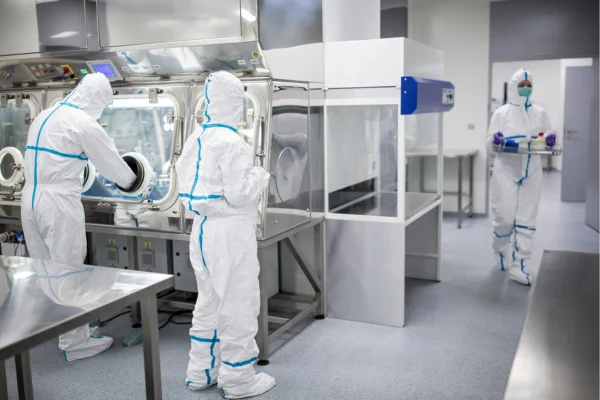
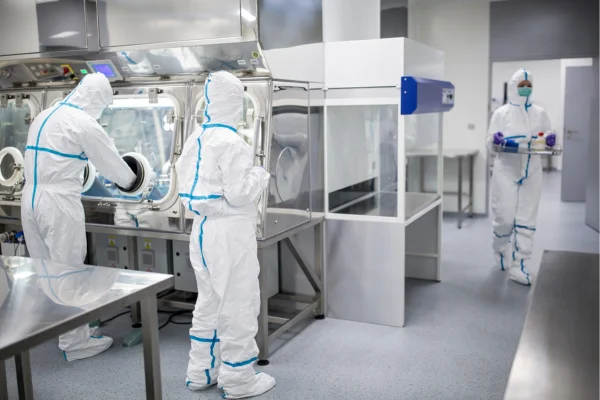
Our vaccine process development capabilities include microbial strain development, cell banking, upstream fermentation process development, downstream purification development, formulation development, analytical testing, GMP manufacturing, and fill and finish services. These integrated capabilities help projects move efficiently from early-stage research toward clinical and commercial production.
Process scalability is another important consideration. Yaohai Bio-Pharma applies Quality by Design principles during process development and uses advanced experimental approaches to optimize production parameters. Our platform supports process scale-up from laboratory development through larger manufacturing stages, helping establish stable and reproducible production processes.
In addition, our quality systems are designed to support global development requirements. With GMP-compliant facilities, experienced technical teams, and support across analytical development and regulatory documentation, we help partners address key challenges throughout the vaccine lifecycle.
Conclusion
The development of cholera vaccination represents an important milestone in the history of infectious disease prevention. From early discoveries in bacteriology to today’s advanced vaccine process development platforms, continuous improvements in science and manufacturing have made vaccines more reliable and scalable.
At Yaohai Bio-Pharma, we provide end-to-end vaccine development support through our expertise in microbial expression systems, process optimization, analytical development, and GMP manufacturing. We combine technical experience with integrated CRDMO capabilities to help advance vaccine projects from early research to clinical and commercial stages. With flexible platforms, comprehensive quality systems, and dedicated scientific teams, we work to provide efficient and reliable solutions for modern vaccine development needs.