In the rapidly evolving landscape of biopharmaceutical manufacturing, the transition from laboratory discovery to commercial-scale production remains one of the most significant hurdles for drug developers. Scaling microbial processes requires a sophisticated blend of biological understanding, engineering precision, and regulatory foresight. As the industry shifts toward more complex modalities like recombinant proteins, nanobodies, and plasmid DNA, the role of a specialized biologics CDMO has become indispensable. These organizations provide the technical infrastructure and expertise necessary to navigate the complexities of fermentation, ensuring that life-saving therapies can reach the global market efficiently and safely.
The Science of Microbial Scale-Up: Beyond Volume Expansion
At its core, scaling a microbial process is not merely about increasing the size of the vessel. It is a delicate balancing act of maintaining the physiological environment that a specific microorganism requires to produce high-quality biological material. When a process moves from a 2-liter benchtop bioreactor to a 2,000-liter industrial fermenter, the physical dynamics of the system change dramatically.
One of the primary challenges in scale-up is oxygen transfer. Microbial cultures, particularly high-density E. coli or yeast fermentations, have an immense demand for dissolved oxygen. In larger tanks, achieving a uniform oxygen distribution becomes increasingly difficult due to the height of the liquid column and the limits of agitation speed. If oxygen levels drop below a critical threshold, the microbes may shift to anaerobic metabolism, leading to the accumulation of unwanted byproducts like acetate, which can inhibit growth and degrade product quality.
Furthermore, heat removal is a critical engineering factor. Microbial metabolism is exothermic; it generates heat. In a small vessel, the high surface-area-to-volume ratio allows for easy temperature control. However, as volume increases, the surface area relatively decreases, making it harder to dissipate heat. This requires advanced cooling jacket designs and precise control systems to prevent thermal stress on the biological system. A high-tier biologics CDMO utilizes computational fluid dynamics (CFD) and sophisticated monitoring tools to predict these shifts, ensuring that the “microenvironment” around each cell remains consistent regardless of the total batch size.
Strategic Advantages of the CRDMO Model
As biopharma companies seek to shorten development timelines, the industry has seen the rise of the CRDMO (Contract Research, Development, and Manufacturing Organization) model. Unlike traditional manufacturers who only handle production, a CRDMO integrates the research and development phase directly with manufacturing. This integration is vital for microbial processes where the “process is the product.”
In the CRDMO framework, process development (PD) is performed with the end-scale in mind. For instance, researchers might screen for strains that are inherently more robust to the shear stress found in large-scale impellers. By identifying these characteristics early, the organization minimizes the risk of “scale-up failure,” where a process that worked perfectly in the lab fails to perform at the pilot or commercial level. This end-to-end oversight ensures a seamless technology transfer, reducing both the cost and the time required to move from DNA sequence to clinical trial material.
Yaohai Bio-Pharma: A Leader in Microbial Expression
When it comes to specialized microbial manufacturing, Yaohai Bio-Pharma stands out as a premier partner for global biotechnology firms. Established in 2010, the company has positioned itself as the first and largest CRDMO in China focusing exclusively on microbial expression systems. By specializing in this niche, they have developed a level of technical depth that generalist providers often lack, particularly in the production of recombinant proteins, peptides, enzymes, and nucleic acids.
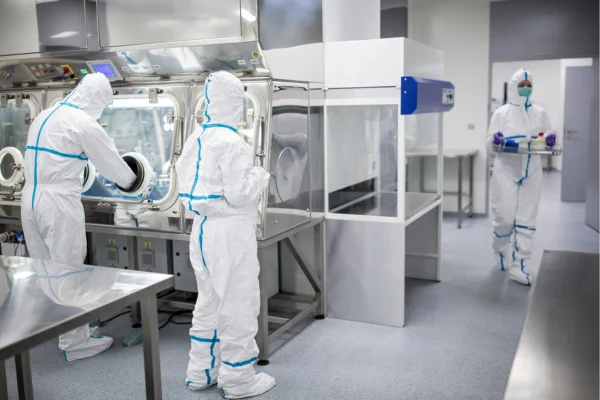
The infrastructure at Yaohai Bio-Pharma is designed to support every stage of the drug lifecycle. Our facilities include over 20,000 square meters of cGMP production space, featuring an automated fermentation platform that ranges from 2L to 2,000L. This wide range of capacities allows for the flexible production of everything from small-scale toxicity study batches to large-scale commercial campaigns. For developers working on cutting-edge modalities, Yaohai Bio-Pharma offers specialized suites, including high-potency manufacturing areas and Bio-Safety Level 2 (BSL-2) labs for handling pathogenic bacteria or complex microbial engineering projects.
Precision Engineering and Regulatory Excellence
Quality and compliance are the cornerstones of the services provided by Yaohai Bio-Pharma. Navigating the regulatory requirements of the NMPA, FDA, and EMA requires a robust Quality Management System (QMS). The company’s integrated platform supports not only the physical manufacturing but also the critical CMC (Chemistry, Manufacturing, and Controls) documentation required for IND (Investigational New Drug) and BLA (Biologics License Application) filings.
Our technical capabilities extend deep into downstream processing (DSP), which is often the bottleneck in microbial production. Because microbial products are often expressed intracellularly as inclusion bodies, Yaohai Bio-Pharma utilizes high-pressure homogenization and sophisticated refolding techniques to recover bioactive proteins with high purity. Our purification suites are equipped with advanced chromatography systems and tangential flow filtration (TFF) skids, ensuring that the final drug substance meets the stringent specifications required for human or animal health applications.
Conclusion: Partnering for Future Innovation
The future of biologics lies in the ability to produce increasingly complex molecules at a scale that makes them accessible to patients worldwide. Achieving this requires more than just hardware; it requires a partnership with a biologics CDMO that understands the nuances of microbial physiology and industrial engineering.
Through its comprehensive CRDMO service model, Yaohai Bio-Pharma provides the bridge between innovative research and commercial reality. By offering a one-stop solution—from strain construction and cell banking to scale-up and fill-finish—We empower biopharma companies to focus on their core mission of drug discovery while leaving the technical complexities of manufacturing to the experts. In an industry where speed and reliability are paramount, the specialized expertise of Yaohai Bio-Pharma ensures that the next generation of microbial-derived therapies is delivered with precision and excellence.