VHH domain antibodies are a type of nano-antibody derived from camelid heavy chain antibodies. They are also referred to as single-domain antibodies and are built from a single antigen-binding domain. This design is compact, typically around 15 kDa, and it enables properties that are difficult to achieve with conventional full-length antibodies.
In practical development settings, teams often evaluate VHH domain antibodies because they can support high affinity binding and access to epitopes that may be partially hidden due to structural constraints on targets. For many programs, this translates into the ability to engage complex surfaces on proteins, including sites that larger antibodies may not reach efficiently.
Why VHH Structure Matters for Performance
The core reason VHH domain antibodies behave differently is their architecture. Conventional antibodies include multiple domains and larger overall size. VHH domain antibodies rely on a single-domain that folds into a stable binding unit. That compact form can influence several performance factors.
First, deep tissue penetration is often a key expectation. Smaller antibody formats tend to diffuse more readily through dense biological environments. Second, VHH domain antibodies can show robustness in binding when targets are conformationally constrained. Third, their simplified composition can make development and manufacturing more streamlined in certain workflows.
These differences are not only theoretical. They affect screening strategies, formulation considerations, and downstream processing requirements. A well planned development approach typically starts with selecting the right microbial expression system and validating analytical methods that reflect the final product format.
VHH Domain Antibodies Versus Conventional Antibodies
Conventional antibodies are large, multivalent molecules, commonly engineered for strong binding and long circulation. Their multimeric nature can be beneficial for certain targets, but it also brings constraints. Binding sites may be sterically protected, and larger size can limit movement in specific tissues.
VHH domain antibodies offer a different balance. They can be engineered to recognize specific epitopes with high specificity while remaining small enough to access sites that are less accessible to conventional formats. Their single-domain nature also supports flexible development concepts such as focusing on expression stability and consistent product quality.
From a development perspective, this means the evaluation criteria may shift. Instead of only measuring binding affinity, teams also consider aggregation behavior, expression consistency, and how the antibody performs after formulation. These factors are closely connected to how the process is developed and controlled from the beginning.
Development Considerations That Influence Success
Users exploring VHH domain antibody programs typically face similar practical questions. How will the molecule be expressed reliably? What is the manufacturing approach for consistent quality? How will analytical testing confirm identity, purity, and stability throughout development?
A microbial expression strategy is often chosen for VHH domain antibodies. Microbial systems can provide a scalable foundation for production, and they can reduce complexity compared with some mammalian workflows. However, success still depends on process development, downstream processing design, and method validation.
Quality by Design is frequently used to ensure robustness. In this approach, development teams define Critical Quality Attributes and Critical Process Parameters based on systematic experimentation. This can help reduce variability and support smoother transitions across the drug lifecycle.
Yaohai Bio-Pharma’s Nano-Body CRDMO Platform for VHH Programs
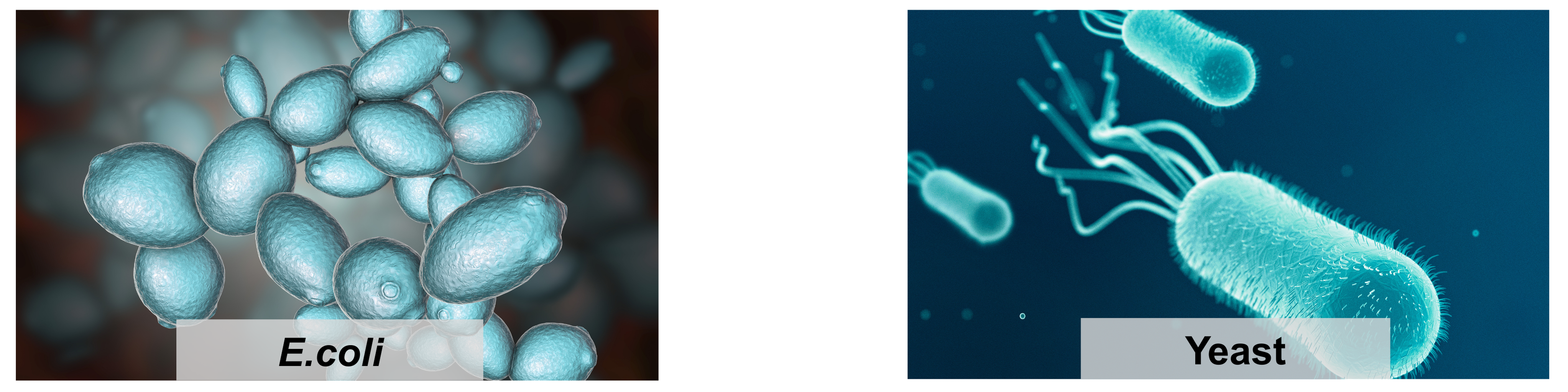
Yaohai Bio-Pharma provides an end-to-end nano-body CRDMO platform designed for consistent VHH domain antibody development from early research to commercialization. The platform is built on microbial expression using E. coli and yeast, enabling high-yield and stable performance across projects.
Comprehensive Service Coverage Across the Lifecycle
The development pathway typically includes more than just manufacturing. Yaohai Bio-Pharma supports cell banking and microbial strain development and screening, followed by upstream process development and downstream process development. Formulation development and GMP manufacturing are included as part of the pathway.
For later stage needs, the platform also supports analytical and testing activities and regulatory affairs support. In addition, fill and finish capability is available for final drug product presentation formats. This helps teams connect process design decisions with the testing strategy and the final product requirements.
Microbial Strain Development and Screening with Scalable Execution
VHH domain antibodies often require careful attention to expression and recovery performance. Yaohai Bio-Pharma includes microbial strain development and screening as part of its service platform. After selection, cell banking is supported through PCB, MCB, or WCB documentation and execution, helping maintain consistency across production campaigns.
Upstream and downstream development is handled with an engineering mindset. The goal is to establish a reliable manufacturing envelope rather than only optimizing for a single condition. This supports flexible scale-up and a repeatable path from small scale development to larger production.
Analytical Method Development and Validation
Analytical confirmation is essential for confidence in product quality. Yaohai Bio-Pharma provides analytical method development and validation as part of the end-to-end service scope. A defined testing framework supports release readiness and can help teams understand product behavior under relevant conditions.
Equipment and Drug Product Readiness
Manufacturing capacity is designed to support flexible scale-up from 50 L to 2000 L. The platform also supports multiple production scenarios to match program needs. Drug product production lines cover lyophilized vials and liquid vials as well as prefilled syringes, enabling appropriate final presentations for different clinical or commercial plans.
This range matters because formulation and fill and finish requirements can differ between programs. When the platform is built with end-to-end capability, it becomes easier to align upstream decisions with downstream recovery and final product manufacturing.
How Regulatory Planning Fits VHH Domain Antibody Programs
VHH domain antibodies often move through complex documentation and approval processes. Yaohai Bio-Pharma includes regulatory affairs support as part of the service platform, along with quality assurance and quality control systems aligned with GMP expectations and global regulatory standards.
Yaohai Bio-Pharma also supports IND filing needs as part of the microbial CRDMO workflow. In addition, the company highlights experience supporting projects that span preclinical development through Phase I to Phase III and regulatory filings in both the United States and China, as well as Australia.
For teams, regulatory readiness is closely tied to documentation quality, consistent batch records, and the strength of the overall quality system. When these elements are addressed early, later stage submissions tend to face fewer surprises.
Service Highlights Built Around Practical Outcomes
A VHH domain antibody program benefits from coordinated execution rather than isolated steps. Yaohai Bio-Pharma emphasizes advanced process development based on QbD principles and uses DoE to identify CQA and CPP. This structured development approach supports product consistency and process robustness.
The company also references project experience across many programs, including work that covers clinical trials and filings in multiple regions. Dedicated project management is part of the model, with full-lifecycle oversight designed to identify critical path items and manage risks.
Conclusion
VHH domain antibodies differ from conventional antibodies primarily because they are built from a single stable antigen binding domain with a compact size. This structure supports epitope accessibility, binding behavior, and potential tissue penetration advantages that make VHH domain antibodies useful for diagnostics and therapeutics.
For teams planning a VHH program, the pathway involves more than selecting a binding candidate. It requires microbial expression execution, well governed process development, validated analytical methods, GMP manufacturing, and regulatory aligned quality systems. Yaohai Bio-Pharma is positioned to support that full workflow through an end-to-end nano-body CRDMO platform based on E. coli and yeast. In our approach, we integrate microbial strain development and cell banking, upstream and downstream process development, formulation development, analytical method development and validation, GMP manufacturing, fill and finish, and regulatory affairs support. We also focus on QbD driven development, scalable manufacturing capacity from 50 L to 2000 L, and a comprehensive quality system aligned with global GMP expectations, so programs can move forward with confidence from R and D into commercialization.