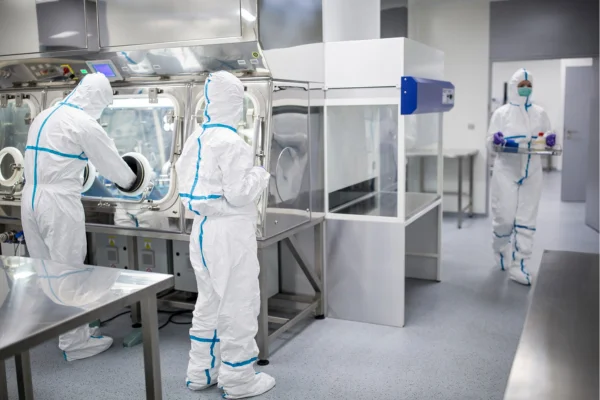
As pharmaceutical companies expand from early research to clinical and commercial stages, quality management becomes more complex. Larger production scales involve more materials, processes, testing requirements, and regulatory considerations. A reliable quality system needs to connect development, manufacturing, and analytical activities.
Maintaining quality at scale is not only about final product testing. It requires continuous monitoring throughout the entire lifecycle, including raw material evaluation, process control, analytical testing, and documentation management. For biologics manufacturers, building a structured quality approach helps support consistent production and regulatory preparation.

Understanding the Role of Quality Systems in Pharmaceutical Development
Quality management in pharmaceutical production covers multiple stages. From initial process design to commercial manufacturing, companies need clear standards for each operation. This includes defining testing methods, establishing specifications, and reviewing process performance.
For biologics, quality requirements can become more detailed because products are produced through complex biological systems. Changes in cell lines, fermentation conditions, or purification processes may influence product characteristics. Therefore, companies need suitable analytical strategies to monitor critical quality attributes.
A complete approach to quality control for pharmaceutical industry applications includes more than laboratory testing. It combines method development, validation, stability studies, and data review to support product consistency during different development phases.
Quality systems also help companies prepare for regulatory communication. Proper documentation and traceable data provide important support when products move toward clinical applications or commercial manufacturing.
Managing Quality During Scalable Biologics Production
Scaling up production requires careful control of each manufacturing step. A process that works at laboratory scale may need additional evaluation before being transferred to larger equipment. Parameters such as fermentation conditions, purification steps, and formulation processes should be reviewed during scale-up.
For microbial expression systems, process consistency is closely related to upstream and downstream development. Companies need to evaluate how production conditions affect yield, purity, and product characteristics while maintaining appropriate quality standards.
At this stage, Yaohai Bio-Pharma supports biologics development through microbial CRDMO services based on E. coli and yeast expression systems. The company provides services covering process development, GMP manufacturing, and quality-related support for recombinant proteins, plasmids, nanobodies, and other biologic modalities.
A scalable quality strategy should also consider production capacity and project requirements. Different clinical stages may require different manufacturing volumes, so flexible production planning helps companies manage development progress more effectively.
Building Reliable Analytical Testing and Quality Evaluation
Analytical testing is an important part of pharmaceutical quality management. Before products enter clinical or commercial stages, companies need suitable analytical methods to evaluate identity, purity, stability, and other product characteristics.
A quality control platform usually includes analytical method development, validation, reference standard management, and stability studies. These activities provide scientific data for understanding product performance and supporting regulatory submissions.
For biologics projects, analytical methods should match product characteristics and development stages. A method used during early research may need further optimization when production processes become larger and more complex.
Yaohai Bio-Pharma has established a quality control platform that supports analytical testing, in-process control, release testing, and stability studies. The platform works together with CMC development and manufacturing services to provide quality support across different project stages.
Connecting Compliance with Long-Term Production Goals
Pharmaceutical companies need quality systems that can support both current projects and future expansion. As products move from research to clinical development, quality processes should remain adaptable while meeting regulatory expectations.
GMP requirements provide a framework for manufacturing operations, but companies also need practical systems for daily execution. This includes trained teams, controlled procedures, data management, and continuous process review.
When working with external partners, companies should evaluate not only production capability but also quality management experience. A suitable partner can help coordinate process development, analytical studies, manufacturing activities, and documentation preparation.
Our company focuses on providing integrated microbial CRDMO support from early development to manufacturing stages. By combining process expertise, production capabilities, and quality management systems, we help biotechnology companies organize different steps within the biologics development process.
Supporting Consistent Quality Through Integrated Solutions
Maintaining quality at scale requires cooperation between development teams, manufacturing groups, and quality professionals. A structured system allows pharmaceutical companies to identify risks earlier, manage changes more effectively, and maintain clearer communication across different production stages.
From process development to analytical evaluation, each stage contributes to the final quality outcome. For biologics manufacturers, selecting suitable technologies and establishing clear quality workflows are important parts of long-term development planning.
With experience in microbial expression systems and full-lifecycle CRDMO services, Yaohai Bio-Pharma continues to support partners in building practical quality strategies for biologics projects. A connected approach to development, manufacturing, and testing helps companies move projects forward with clearer quality control pathways.
A well-designed quality framework is not only a regulatory requirement. It is also a foundation for stable production and sustainable pharmaceutical development. By integrating scientific evaluation with controlled processes, companies can better manage quality challenges during scale-up.