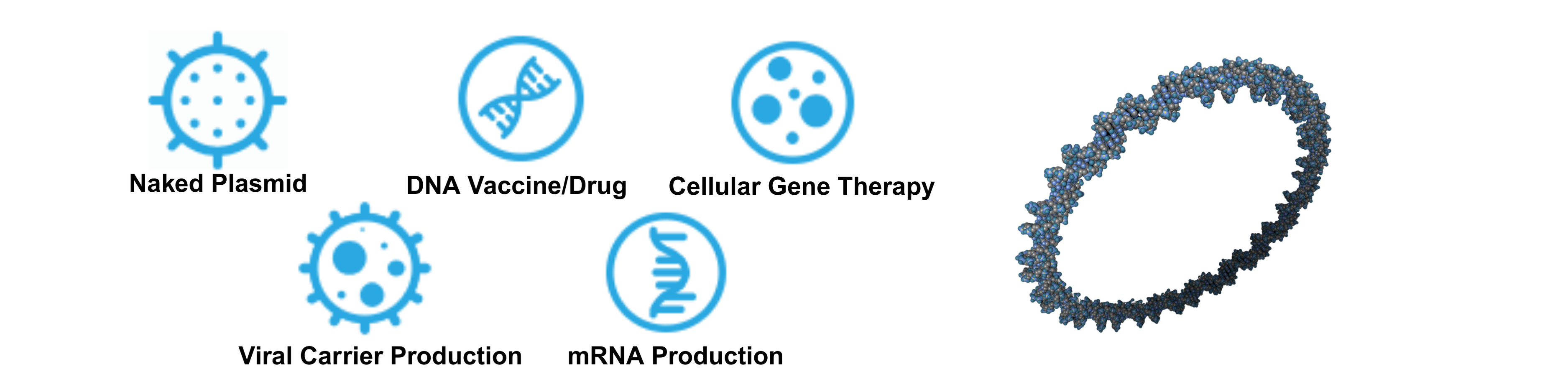
As advanced therapies continue to develop, plasmid manufacturing has become an increasingly important part of modern biomanufacturing. Plasmid DNA serves as a key starting material for multiple applications, including gene therapy, cell therapy, DNA vaccines, and mRNA production. Its role in these emerging modalities means that manufacturing quality, scalability, and regulatory readiness are becoming critical considerations for developers.
However, producing plasmid DNA at the required quality and scale is not a simple amplification process. From plasmid design and strain development to fermentation, purification, and quality testing, every step requires precise control. As programs move from early research toward clinical and commercial stages, plasmid manufacturing challenges are becoming more complex.
The Growing Importance of Plasmid DNA in Modern Therapeutics
Plasmid DNA is a circular DNA molecule that can function as a genetic template in different therapeutic platforms. It can be used as a raw material for viral vector production, a template for mRNA synthesis, or as the final product in DNA vaccine applications.
The expansion of gene and nucleic acid based therapies has increased demand for reliable plasmid supply. Developers now require plasmids that meet strict quality expectations while supporting different development stages. A plasmid suitable for early research may not meet the requirements needed for clinical studies or commercial manufacturing.
This transition creates a need for manufacturing platforms that can support projects from initial development through larger scale production.
Why Plasmid Manufacturing Is Technically Challenging
Maintaining Plasmid Quality and Consistency
One of the biggest challenges in plasmid manufacturing is maintaining consistent product quality. Important attributes such as supercoiled plasmid percentage, purity, identity, and residual impurities must be carefully controlled.
During production, plasmid DNA needs to maintain structural integrity while minimizing unwanted byproducts. Variations in fermentation conditions, host strains, or purification processes can affect final quality. Therefore, manufacturers need well-established processes and analytical methods to ensure batch-to-batch consistency.
Scaling Production from Research to Commercial Supply
A common challenge for emerging therapies is moving from small-scale laboratory production to larger manufacturing volumes. Processes that work effectively at research scale may require significant optimization before they can support clinical or commercial demand.
Plasmid manufacturing involves multiple interconnected stages, including microbial strain development, fermentation, harvesting, purification, and release testing. Each stage needs to be optimized for scalability while maintaining product quality.
A flexible manufacturing platform with multiple production scales can help address these challenges. Yaohai Bio-Pharma provides plasmid production capabilities ranging from development stages to GMP manufacturing, including fermentation scales from 7 L to 2000 L.
Meeting Regulatory and Quality Requirements
As plasmid DNA is increasingly used in clinical applications, regulatory expectations continue to rise. Manufacturers need comprehensive quality systems, documentation, and process controls to support regulatory submissions.
Key considerations include raw material control, microbial strain management, analytical method development, process validation, and release testing. A complete manufacturing strategy must consider regulatory requirements from the early development stage rather than adding compliance measures later.
Building a Reliable Plasmid Manufacturing Process
A successful plasmid manufacturing process requires integration across multiple technical areas.
The process usually begins with plasmid construction and microbial strain development. Selecting and establishing a stable production strain is essential for achieving reliable expression and consistent yields. This is followed by upstream processing, where fermentation conditions are optimized to achieve efficient plasmid production.
Downstream processing is another critical area. Purification methods must effectively remove impurities while preserving plasmid structure and activity. Advanced analytical testing is also necessary to confirm identity, purity, and quality attributes before product release.
Because plasmid manufacturing involves many variables, process development based on Quality by Design principles has become increasingly important. This approach helps identify critical quality attributes and critical process parameters to build more predictable manufacturing processes.
How Manufacturing Partners Can Support Plasmid Development
For many developers, establishing an internal plasmid manufacturing system requires significant investment in equipment, expertise, and regulatory infrastructure. Working with an experienced manufacturing partner can provide access to established platforms and technical capabilities.
An effective plasmid manufacturing partner should offer more than production capacity. Important factors include experience with different plasmid applications, strong analytical capabilities, GMP manufacturing experience, and support throughout development stages.
Integrated services covering plasmid construction, strain development, process optimization, manufacturing, quality testing, and regulatory support can help reduce complexity and improve project efficiency.
Conclusion
As demand for gene therapies, vaccines, and nucleic acid-based medicines continues to expand, plasmid manufacturing will remain a critical foundation for biomanufacturing development. The challenges of maintaining quality, scaling production, and meeting regulatory expectations require advanced technical platforms and reliable manufacturing experience.
At Yaohai Bio-Pharma, we provide integrated plasmid manufacturing solutions covering plasmid construction, microbial strain development, process development, analytical testing, and GMP production. With our microbial CRDMO platform, flexible fermentation capabilities, and experience supporting projects from preclinical research to clinical and commercial stages, we help partners build reliable plasmid supply chains for next-generation therapies. Our goal is to combine technical expertise, quality systems, and manufacturing capabilities to support the successful advancement of innovative biological products.