Recombinant protein expression systems are the foundation for producing proteins used in therapeutics, vaccines, diagnostics, research reagents, and other biotechnological applications. As projects move from early discovery to clinical development and commercial manufacturing, selecting an appropriate expression system becomes a critical decision that affects yield, product quality, process efficiency, and future scalability.
A system that works well at laboratory-scale may not always meet the requirements of large-scale production. Factors such as protein structure, biological activity, purification complexity, regulatory expectations, and manufacturing capacity must be considered from the beginning. Choosing the right platform early can help reduce process challenges and support a smoother transition from research to biomanufacturing.
Key Factors When Selecting a Recombinant Protein Expression System
Different recombinant protein expression systems offer unique advantages depending on the characteristics of the target protein. The most suitable platform should balance expression efficiency with product quality and manufacturing feasibility.
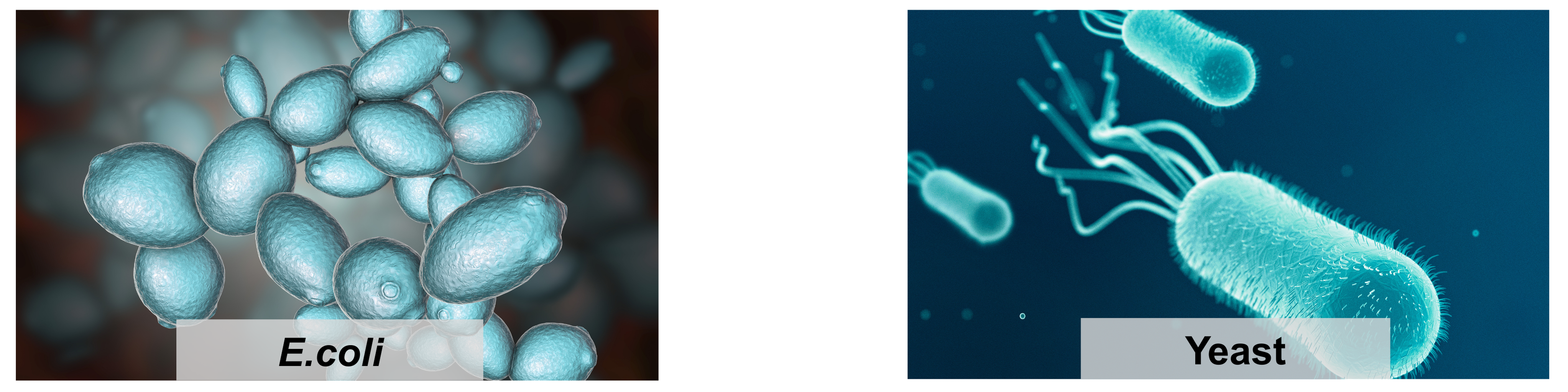
Microbial expression systems, including Escherichia coli and yeast platforms, are widely used because they provide efficient growth, established fermentation processes, and strong scalability. E. coli expression is commonly selected for proteins that do not require complex post-translational modifications, while yeast expression can provide additional capabilities for more complex protein structures.
When evaluating an expression system, developers typically consider several important questions. Can the system achieve sufficient protein yield? Can it maintain consistent product quality between batches? Is the downstream purification process manageable? Can the process be transferred to GMP manufacturing without major adjustments?
These considerations are especially important when a recombinant protein moves beyond research applications and enters clinical or commercial development.
From Laboratory Expression to Scalable Manufacturing
A successful recombinant protein project requires more than achieving expression in a small scale experiment. The manufacturing process must be designed with future scale-up in mind.
During early development, scientists optimize multiple parameters, including gene sequence design, host strain selection, fermentation conditions, protein expression levels, and purification strategies. These elements work together to determine the overall performance of the production process.
A common challenge is that increasing production volume can introduce unexpected issues, such as reduced protein stability, lower recovery rates, increased impurities, or changes in product characteristics. Therefore, a scalable expression system should have a clear development pathway from laboratory studies to pilot production and GMP manufacturing.
An integrated approach allows developers to identify potential risks earlier and establish a reliable process that supports different development stages.
Comparing Common Recombinant Protein Expression Platforms
The choice of expression platform depends largely on the biological properties and intended use of the target protein.
E.coli expression systems are widely adopted for their rapid growth, well-establishedgenetic tools, and cost efficiency. They are suitable for many recombinant proteins, peptides, enzymes, and other biologics that can be produced without complex cellular processing.
Yeast expression systems provide another valuable option, particularly for proteins requiring specific folding environments or secretion capabilities. Yeast platforms can support the production of more complex recombinant proteins while maintaining advantages in fermentation scalability.
Other expression systems may also be considered depending on the project requirements. The final selection should be based on a comprehensive evaluation of protein characteristics, manufacturing goals, and regulatory needs rather than a single performance indicator.
How Expression System Selection Impacts the Development Timeline
Choosing an unsuitable expression system can create delays during later development stages. A protein that expresses well in research conditions may face difficulties during purification, formulation, or scale-up.
For this reason, experienced development teams usually evaluate the entire production workflow from the beginning. This includes upstream process development, downstream purification, analytical testing, and manufacturing readiness.
A well planned expression strategy helps establish a more predictable path toward clinical supply and commercial production. It also allows organizations to make better decisions regarding process optimization and resource allocation.
Supporting Recombinant Protein Development with Integrated Capabilities
As recombinant protein technologies continue to advance, development partners with comprehensive capabilities can provide support across multiple stages of the product lifecycle. An integrated platform can connect strain engineering, process development, analytical characterization, and GMP manufacturing to create a more efficient development process.
Rather than treating expression, purification, and manufacturing as separate steps, a connected approach helps ensure that each stage supports the next. This is particularly valuable for projects requiring reliable scale-up and consistent quality.
Conclusion
Selecting the right recombinant protein expression systems is a strategic decision that influences every stage from research development to biomanufacturing. The ideal system should not only deliver effective protein expression but also support scalability, quality control, and long-term manufacturing needs.
At Yaohai Bio-Pharma, we provide integrated recombinant protein development and manufacturing solutions based on advanced microbial expression platforms. We support projects through strain engineering, cell banking, process development, purification optimization, analytical characterization, and GMP manufacturing. Our experience covers a wide range of recombinant proteins, including peptides, cytokines, enzymes, vaccine-related proteins, and other biologic products. With flexible fermentation capabilities and a comprehensive CRDMO platform, we help customers move recombinant protein projects from early research toward clinical and commercial production with reliable processes and quality-focused solutions.