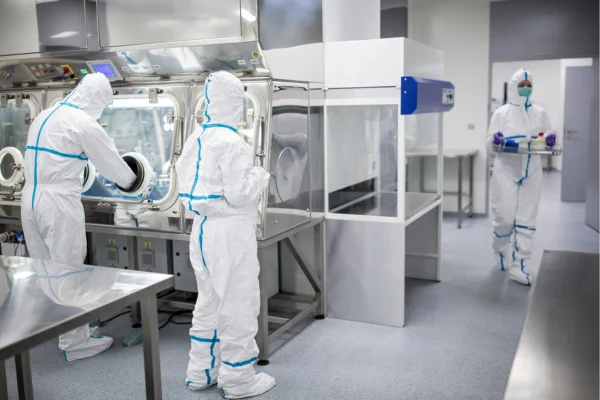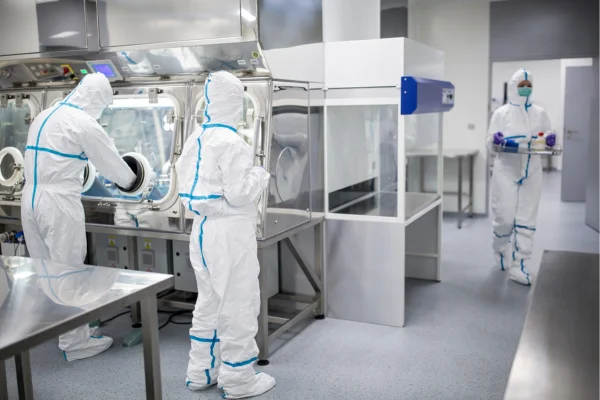
A successful laboratory experiment is only the beginning of biological product development. Moving a promising protein from research scale to reliable manufacturing requires a series of complex decisions involving expression strategy, process optimization, purification, quality evaluation, and scalability. Many challenges appear during this transition because conditions that work in a laboratory environment may not directly translate into consistent production. Effective process development is therefore essential for transforming scientific discoveries into manufacturable biological products.
The Challenges of Moving from Research to Manufacturing
Protein development often begins with successful expression and characterization at a small scale. However, increasing production volume introduces new challenges related to yield, stability, consistency, and manufacturing efficiency.
A protein that performs well during early experiments may behave differently during larger-scale production. Changes in fermentation conditions, purification parameters, or equipment environment can influence product characteristics. Without proper optimization, companies may experience unexpected variations, longer development timelines, or increased production costs.
Protein process development focuses on creating a reliable pathway that connects laboratory findings with scalable manufacturing. It involves understanding how each stage affects the final product and establishing controlled processes that can maintain quality during scale-up.
For biotechnology companies, this stage is critical because it determines whether a candidate protein can progress efficiently toward clinical development and commercial supply.
Optimizing Expression and Production Strategies
The foundation of successful protein manufacturing begins with selecting an appropriate expression system and optimizing production conditions. Different proteins have different structural requirements, meaning that expression strategies must be customized according to molecular characteristics.
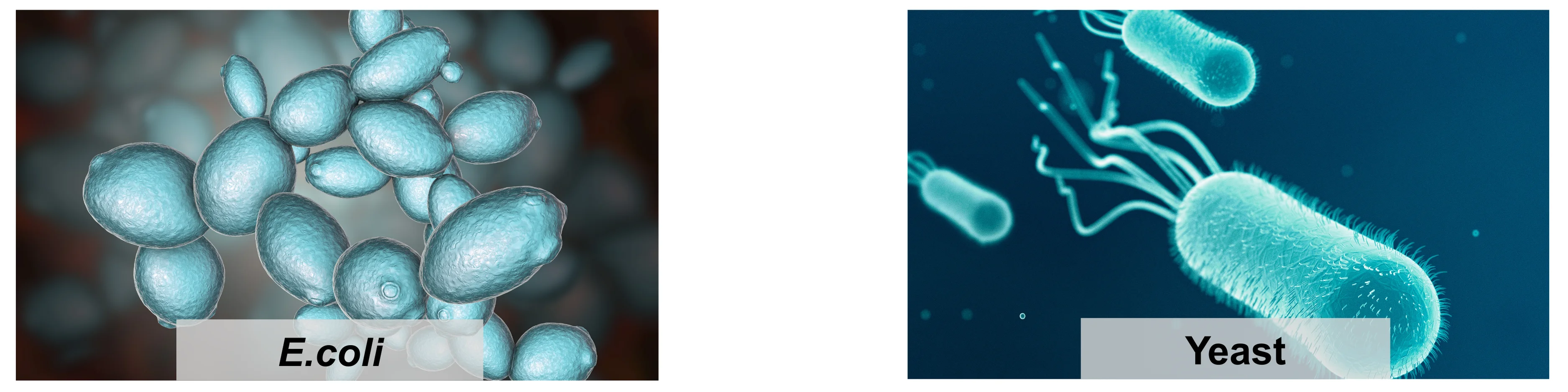
We work with microbial expression platforms, including E. coli and yeast systems, to support recombinant protein development. These platforms offer advantages such as established production methods, flexible scalability, and suitability for various biological products.
During process development, important factors such as gene design, host selection, cultivation conditions, and fermentation parameters require careful evaluation. Optimizing these elements helps improve protein yield while maintaining structural integrity and biological activity.
High-density fermentation is another important component of microbial manufacturing. By controlling key parameters such as nutrient supply, oxygen transfer, temperature, and pH, production processes can achieve greater consistency during scale-up.
Developing Efficient Purification Processes
Expression alone does not determine manufacturing success. After protein production, purification becomes a major factor influencing product quality and process efficiency.
Different proteins present different purification challenges. Some may require multiple purification steps to achieve the desired purity, while others may be sensitive to processing conditions that affect stability or activity.
A well-designed purification strategy considers product characteristics, impurity profiles, and manufacturing requirements. Analytical evaluation throughout this stage helps identify potential issues and optimize process performance.
We integrate upstream production development with downstream purification optimization to create complete manufacturing pathways. This approach helps ensure that processes are not only productive but also suitable for future clinical and commercial applications.
Ensuring Quality and Scalability During Process Development
One of the greatest challenges in biological manufacturing is maintaining consistent quality while increasing production scale. A process that performs effectively in a small laboratory setting must be carefully adapted before entering larger manufacturing environments.
Scale-up requires detailed evaluation of process parameters, equipment conditions, and quality attributes. Each adjustment must be supported by analytical data to confirm that product characteristics remain within acceptable ranges.
A comprehensive protein process development strategy includes process characterization, analytical method development, and quality assessment. These activities provide valuable information for improving process reliability and preparing products for regulatory expectations.
We apply systematic development approaches to help biotechnology companies establish scalable production processes. By combining technical expertise with manufacturing capabilities, we help reduce uncertainty during the transition from laboratory studies to larger-scale production.
The Importance of Integrated Development Support
Protein manufacturing involves multiple interconnected stages, and challenges in one area can affect the entire development timeline. Working with an experienced partner allows companies to access specialized knowledge and infrastructure without creating every capability internally.
We provide integrated recombinant protein development services covering strain construction, cell bank establishment, expression optimization, fermentation scale-up, purification development, analytical evaluation, and GMP manufacturing preparation.
This full-lifecycle approach helps maintain continuity between development stages. Instead of treating each step separately, we consider how upstream decisions influence downstream performance and final manufacturing outcomes.
For companies developing recombinant proteins, an integrated strategy can improve efficiency, control risks, and create a clearer pathway toward clinical and commercial production.
Creating Reliable Pathways from Laboratory Innovation to Manufacturing
At Yaohai Bio-Pharma, we combine microbial expression expertise, fermentation capabilities, purification technologies, and GMP-compliant manufacturing systems to provide integrated recombinant protein development solutions for biotechnology companies. With experience in microbial expression platforms and full-lifecycle CDMO services, we help global partners address challenges in process optimization, scale-up, and manufacturing preparation.
The transition from laboratory research to reliable production requires a development strategy that balances productivity, quality, scalability, and regulatory expectations. Through comprehensive services covering expression optimization, fermentation process development, purification studies, analytical evaluation, and GMP manufacturing support, we help customers establish efficient pathways from early research to clinical and commercial applications.
Our technical capabilities and customer-focused approach enable biotechnology companies to manage complex development requirements with greater confidence. By providing customized protein process development solutions, we support partners in transforming innovative biological research into consistent, high-quality manufacturing outcomes.