In the competitive field of biopharmaceutical development, the ability to generate high-quality proteins efficiently is a cornerstone of success. Whether you are developing a novel therapeutic, a diagnostic enzyme, or a complex nanobody, the efficiency of your manufacturing process directly impacts your project’s timeline and budget. At Yaohai Bio-Pharma, we have spent years refining the nuances of microbial expression to help our partners overcome the hurdles of low productivity. Improving titers requires a holistic approach that spans from the initial genetic design to the final purification stages. Below, we share ten essential tips to optimize yields in recombinant protein production, ensuring your process is both scalable and cost-effective.
Optimize Codon Usage for the Host Organism
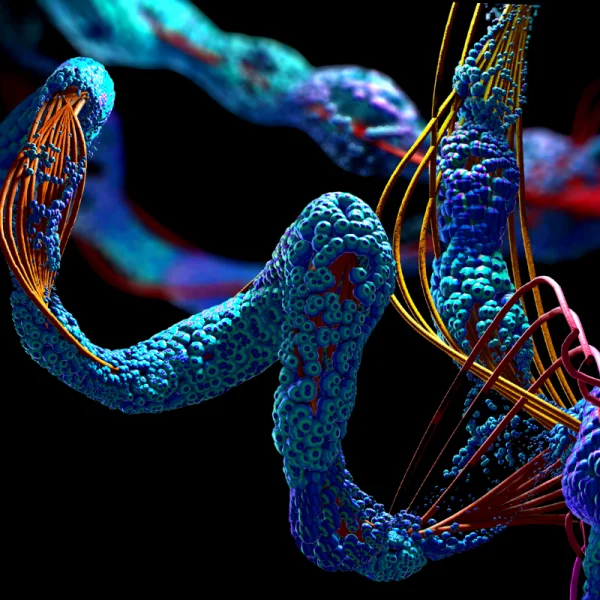
The genetic code is degenerate, meaning multiple codons can encode the same amino acid. However, different organisms have “preferred” codons based on the abundance of corresponding tRNAs. When we initiate a project, we prioritize codon optimization to match the microbial host’s translational machinery. This step prevents ribosome stalling and premature translational termination, which are common culprits for low yields in recombinant protein manufacturing.
Select the Right Expression Vector and Promoter
Not all “strong” promoters are ideal for every protein. While the T7 promoter is a workhorse in E. coli systems, its high strength can sometimes lead to metabolic exhaustion or the formation of insoluble inclusion bodies. We often evaluate a range of inducible promoters to find a balance between growth and production. The goal is to ensure the host cell remains viable long enough to accumulate the maximum amount of target protein.
Focus on Signal Peptide Screening for Secretion
If your protein needs to be secreted into the periplasm or the extracellular medium—often necessary for proper disulfide bond formation—the choice of signal peptide is critical. At Yaohai Bio-Pharma, we utilize a library of signal sequences to ensure efficient translocation across the cell membrane. Successful secretion can simplify downstream processing by separating the target protein from the bulk of intracellular host cell proteins.
Implement High-Density Fed-Batch Fermentation
Batch culture often reaches a plateau quickly due to nutrient depletion. To truly optimize recombinant protein production, transitioning to a sophisticated fed-batch strategy is essential. By precisely controlling the feed rate of glucose or other carbon sources, we can maintain the culture in a state of exponential growth for longer periods, achieving cell densities that far exceed standard laboratory flasks.
Control Oxygen Transfer and Agitation
Microbial cultures are oxygen-hungry, especially at high densities. In large-scale recombinant protein manufacturing, maintaining a sufficient Dissolved Oxygen (DO) level is a major engineering challenge. We utilize advanced bioreactor designs with optimized impeller configurations and sparging systems to ensure that oxygen levels do not become a limiting factor, which would otherwise trigger anaerobic metabolism and inhibitory byproduct accumulation.
Fine-Tune Induction Temperature
Heat is a byproduct of metabolism, but it also influences protein folding rates. Often, lowering the temperature during the induction phase (e.g., from 37°C to 25°C) can slow down protein synthesis just enough to allow the cell’s chaperones to fold the protein correctly. This strategy is a primary method we use to increase the fraction of soluble, bioactive protein versus inactive inclusion bodies.
Monitor and Adjust pH Profiles
Metabolic activity naturally shifts the pH of the fermentation broth. If the environment becomes too acidic or basic, it can stress the cells and lead to protein degradation. Our automated systems at Yaohai Bio-Pharma provide real-time pH monitoring and adjustment, ensuring the fermentation environment remains within the optimal range for both biomass accumulation and protein stability.
Optimize Inclusion Body Refolding Strategies
For many complex proteins, the formation of inclusion bodies is unavoidable at high expression levels. Rather than seeing this as a failure, we treat it as an opportunity for high-purity recovery. By optimizing the solubilization and subsequent refolding buffers—adjusting redox pairs, salts, and detergents—we can often achieve higher final yields of functional protein than if the protein had been expressed solubly at a lower concentration.
Utilize Quality by Design (QbD) Principles
Yield optimization should not be a matter of trial and error. We apply Quality by Design (QbD) and Design of Experiments (DoE) methodologies to systematically map the “design space” of the process. By understanding how variables like temperature, pH, and feed composition interact, we can identify the “sweet spot” that maximizes productivity while maintaining strict quality attributes.
Choose an Integrated CRDMO Partner
The most significant yield gains often come from the seamless integration of upstream and downstream activities. When the team designing the strain is in constant communication with the team running the 2,000L fermenter, technical gaps are closed. This synergy is the core of the service model we provide, ensuring that every step of the process is optimized for the next.
Yaohai Bio-Pharma: Your Expert in Microbial Expression
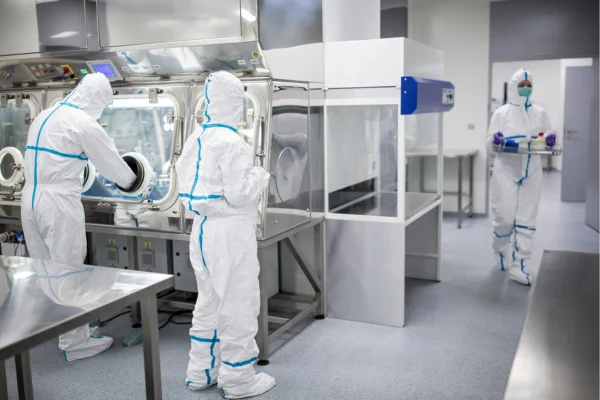
As a leader in the field, Yaohai Bio-Pharma provides specialized services tailored to the complexities of microbial recombinant protein manufacturing. We understand that every molecule is unique, requiring a customized strategy to reach its full potential. Our facility is equipped with over 20,000 square meters of cGMP-compliant space, supporting projects from early-stage research through to commercial-scale production.
Our recombinant protein platform is specifically designed to handle a diverse array of products, including enzymes, growth factors, and nanobodies. We offer comprehensive cell banking, process development, and analytical validation services. By focusing exclusively on microbial systems like E. coli, Pichia pastoris, and Saccharomyces cerevisiae, we have developed a depth of expertise that allows us to solve the toughest expression challenges.
At Yaohai Bio-Pharma, we believe that the future of biologics depends on reliable and scalable production. Our team of scientists and engineers works tirelessly to ensure that your recombinant protein production process is not only high-yielding but also robust enough to satisfy global regulatory standards. Whether you are looking to produce milligram quantities for initial testing or kilograms for clinical trials, we provide the infrastructure and technical intelligence to turn your biological vision into a successful reality. By partnering with us, you gain access to a platform built on precision, quality, and a commitment to advancing global health through microbial innovation.